Albert I
Sovereign Prince of Monaco
1848 to 1922
Father of Louis II, great-grandfather of Rainier III.
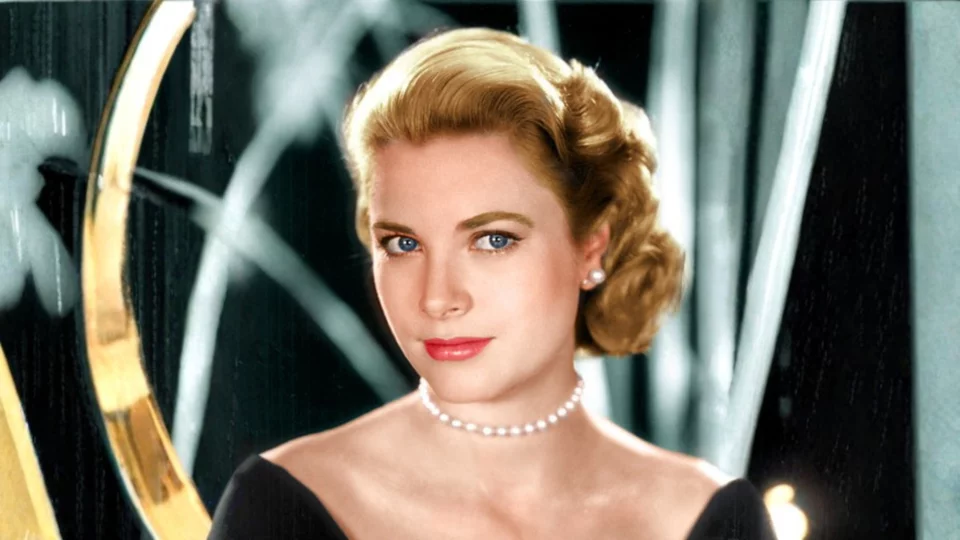
Grace Kelly, the American actress who won the Academy Award for Best Actress in 1955, became Princess of Monaco on 19 April 1956 and lived in the Principality until her death on 14 September 1982. She founded four Monegasque institutions that are still active, and four Monaco landmarks carry her name.
She arrived by sea on 12 April 1956, and she never left. In twenty-six years on the Rock she created four institutions that are still running, redrew the interior of a theatre that now bears her name, chaired the jury of the Principality's first international rose competition, and gave a state of two square kilometres the one thing promotion cannot buy: a face the world already knew.
The legend that grew around her is economic. She is credited with putting Monaco on the map and, by extension, with making its fortune. The first claim holds. The second is not supported by a single official Monegasque statistic, and the Princely Government's own history of those years credits something else entirely. That is where this page spends its attention. Every date below is traced to the Prince's Palace, the Journal de Monaco or the Princely Government, and where a figure circulates without one, we say so.
Eight sourced reference points on Princess Grace of Monaco, from the 1956 wedding to what the Princely Government actually credits for the transformation of the Principality.
Petrini tip: read 1956 as the year Monaco became desirable rather than the year it became expensive. Value arrived later, with reclaimed land and the fiscal settlement, but desirability is what put the Principality on a shortlist of world addresses it has never left.
Sovereign Prince of Monaco
1848 to 1922
Father of Louis II, great-grandfather of Rainier III.
Sovereign Prince of Monaco
1870 to 1949
Son of Albert I, father of Princess Charlotte.
Duchess of Valentinois
1898 to 1977
Daughter of Louis II, mother of Rainier III and Antoinette.
Count of Polignac
1895 to 1964
Husband of Princess Charlotte
Father of Rainier III and Antoinette.
Baroness of Massy
1920 to 2011
Elder sister of Rainier III
Daughter of Princess Charlotte and Pierre de Polignac.
Sovereign Prince of Monaco
1923 to 2005
Son of Princess Charlotte and Pierre de Polignac, father of Caroline, Albert II and Stéphanie.
Princess of Monaco
1929 to 1982
Wife of Rainier III
Mother of Caroline, Albert II and Stéphanie.
Princess of Hanover
Born 23 January 1957
Sister of Albert II
Eldest daughter of Rainier III and Princess Grace, mother of Andrea, Charlotte and Pierre Casiraghi and of Alexandra of Hanover.
Born 8 June 1984
Eldest son of Princess Caroline
Grandson of Rainier III and Princess Grace.
Born 3 August 1986
Daughter of Princess Caroline
Granddaughter of Rainier III and Princess Grace.
Born 5 September 1987
Son of Princess Caroline
Grandson of Rainier III and Princess Grace.
Princess of Hanover
Born 20 July 1999
Daughter of Princess Caroline
Granddaughter of Rainier III and Princess Grace.
Princess of Monaco
Born 1 February 1965
Sister of Albert II
Younger daughter of Rainier III and Princess Grace, mother of Louis and Pauline Ducruet and of Camille Gottlieb.
Born 26 November 1992
Eldest son of Princess Stéphanie
Grandson of Rainier III and Princess Grace.
Born 4 May 1994
Daughter of Princess Stéphanie
Granddaughter of Rainier III and Princess Grace.
Born 15 July 1998
Daughter of Princess Stéphanie
Granddaughter of Rainier III and Princess Grace.
Sovereign Prince of Monaco
Born 14 March 1958
Son of Rainier III and Princess Grace, father of Prince Jacques and Princess Gabriella.
Princess of Monaco
Born 25 January 1978
Wife of Albert II
Mother of Prince Jacques and Princess Gabriella.
Hereditary Prince of Monaco, Marquis of Baux
Born 10 December 2014
Son of Albert II and Princess Charlene, grandson of Rainier III.
Countess of Carladès
Born 10 December 2014
Daughter of Albert II and Princess Charlene, twin sister of Prince Jacques.
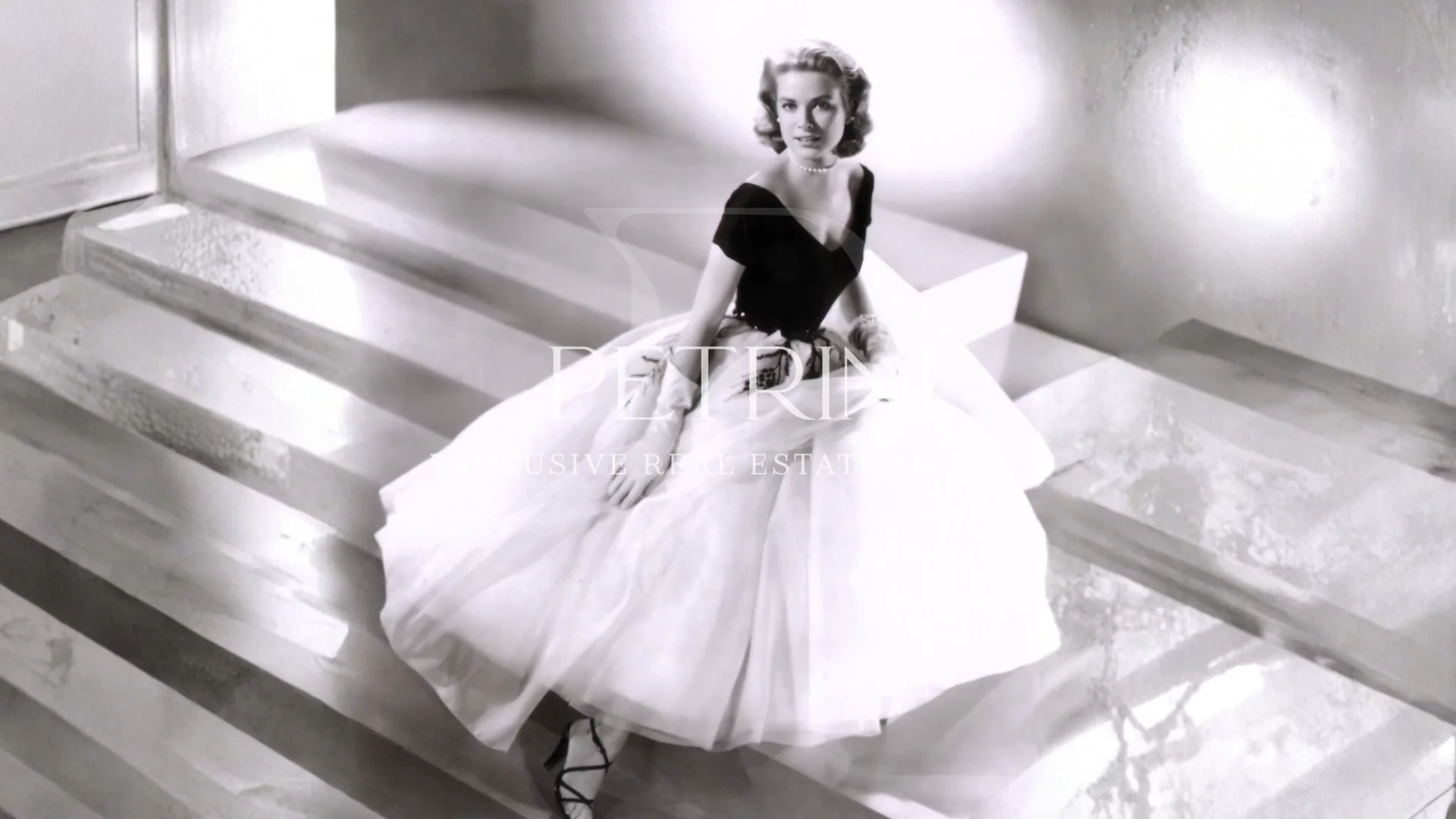
Grace Patricia Kelly was born in Philadelphia on 12 November 1929 and died in Monaco on 14 September 1982. That is the formulation used by the Prince's Palace itself.
Her film career lasted barely five years and ended at its peak. She won the Academy Award for Best Actress on 30 March 1955, for The Country Girl, and retired from acting the following year on her marriage. She was 26.
As Princess of Monaco she had three children, all born in the Principality: Caroline on 23 January 1957, Albert on 14 March 1958, and Stéphanie on 1 February 1965. Her son, Prince Albert II, has reigned since 2005.
Our page on the Princes of Monaco and the Grimaldi dynasty traces the house she married into from 1297 onwards, and the family tree above places her within it.
She made three films with Alfred Hitchcock, and the third one brought her to the Côte d’Azur. Dial M for Murder and Rear Window were both released in 1954; To Catch a Thief followed in 1955.
To Catch a Thief was shot between 31 May and 4 September 1954, and it was the first film Hitchcock made in France. The unit worked across the coast, from the Carlton in Cannes to Nice, Cagnes-sur-Mer, Èze, La Turbie and Gourdon, and in Monte-Carlo itself. The Prince’s Palace notes that Grace Kelly had filmed on the Riviera with scenes shot on the heights above Monaco, a detail worth keeping straight: the celebrated corniche driving sequence runs on French roads overlooking the Principality, not through it.
The consequence matters more than the anecdote. When she came to Monaco in May 1955, the coast was not unfamiliar to her. No source makes the 1954 shoot the cause of the 1955 meeting, and we do not claim it did. What the film did do was fix an image that has been selling this coastline ever since: an American woman at the wheel of an open car, above a blue sea, on a road that leads to a principality. Half of what the world thinks it knows about the Monaco seafront was composed by a camera crew in the summer of 1954.
There is a second thread in that image, and the Principality has spent seventy years pulling on it. The car matters as much as the woman. Monaco had been running a motor race through its own streets since 1929, and through the 1950s the two glamours, cinema and speed, reinforced each other until they became difficult to separate in the public mind. The Monaco Grand Prix and the wedding of 1956 belong to the same decade and to the same reputation.
They met at the Prince's Palace on 6 May 1955, during the eighth Cannes Film Festival, at a photo session arranged by a magazine. The Palace has documented the encounter in detail.
The meeting was set up by the Paris Match journalist Pierre Galante and photographed by Michel Simon for the magazine and by the Irish photographer Edward Quinn. Grace Kelly, an Oscar winner six weeks earlier, rearranged her festival schedule for a last-minute appointment. The Palace archives note something that later accounts tend to omit: the resulting photo feature passed almost unnoticed at the time. What became the story of the century was, on the day, a routine celebrity assignment.
There were two weddings, held on consecutive days. The civil ceremony took place on 18 April 1956 in the Throne Room of the Palace, and the religious ceremony on 19 April 1956 at Monaco Cathedral. It is the second that was broadcast internationally.
Grace Kelly had arrived in Monaco on 12 April aboard the liner Constitution, and the festivities ran for seven days. The Journal de Monaco marked the occasion with a special issue outside its ordinary numbering, issue number 0000, dated 19 April 1956, running to 44 pages, which remains the best primary record of the protocol.
The audience is generally given as 30 million viewers across nine countries, with 1 800 accredited journalists on the Rock. These are the figures in general circulation, repeated by news agencies and by the Arte documentary history of the Principality. They should be read as an accepted order of magnitude rather than a measurement: no primary source confirms them, neither the Prince’s Palace nor the European Broadcasting Union, and the Audiovisual Institute of Monaco, which holds the archives and co-produced the Palace exhibition on the subject, publishes no audience figure of its own and describes only exceptional media coverage for the period. Cross-border television audiences were not measured in 1956 by any method comparable to today’s.
What is not in doubt is the nature of the event. This was among the first royal weddings carried live across borders by the Eurovision network, at a moment when live international television was itself a novelty. The seventieth anniversary is being marked at the Palace with an exhibition in the State Apartments from 8 June to 15 October 2026, alongside a commemorative stamp issued in 40 000 copies.
The same two-stage protocol was followed in 2011, when Princess Charlene married Prince Albert II on 1 and 2 July, civil ceremony first and religious ceremony the next day. Reports that describe either wedding as a single event are compressing two distinct acts.
Four institutions can be attributed to her, and their founding dates are documented in the Monegasque legal record. A fifth, frequently credited to her, was created after her death.
AMADE Mondiale. The children's welfare association she created is almost universally dated to 1963. The only official Monegasque act on record is later: Ministerial Order number 64-001, published in the Journal de Monaco of 17 January 1964, authorising the association and approving its statutes. The 1963 date may well be correct as a founding in fact, but no official source documents it, and the legal birth of AMADE in Monaco is January 1964. The association is still active, based on boulevard de Suisse, and has been chaired since April 1993 by the Princess of Hanover.
The Princess Grace Foundation, created in 1964, is described in its statutes as a private charitable body with philanthropic, cultural and humanitarian purposes. Its current statutes were consolidated by Sovereign Order in 2001 and published in 2002. The Foundation reports having distributed more than 30 million euros between 2000 and 2024, across paediatric research and cultural support.
The Garden Club de Monaco, created in 1968, held its first International Bouquet Competition the same year. The competition reached its 56th edition in May 2025 and remains under the High Patronage of Prince Albert II.
The Princess Grace Dance Academy, founded in 1975 with Prince Rainier III, was conceived as an elite dance school for the Principality. It is now part of the Ballets de Monte-Carlo ensemble.
The Ballets de Monte-Carlo themselves are a different matter. The company was created in 1985, three years after her death, and Monegasque official sources do not agree on the attribution: the cultural portal credits the initiative to the Princess of Hanover, while the government portal traces it to a wish expressed by Princess Grace. It is accurate to say the company grew out of the Academy she founded in 1975. It is not accurate to say she founded it.
Four Monegasque landmarks bear her name, and two of them were named during her lifetime.
The Princess Grace Hospital Centre was renamed in 1958, two years after the wedding. Founded in 1902 at the initiative of Prince Albert I and known until then as the Albert I Hospital, it remains the Principality's main hospital.
The Princess Grace Theatre opened under that name on 17 December 1981, and she inaugurated it herself. The building dates from 1932 as the Théâtre des Beaux-Arts; Prince Rainier III had it restored to her specifications, and she redesigned the interior decoration entirely. It is now chaired by Princess Stéphanie.
The Princess Grace Rose Garden in Fontvieille was created at Prince Rainier III's initiative in her memory and inaugurated on 18 June 1984. It opened with 3 000 square metres, 4 000 rose bushes and 168 varieties, around a bronze statue by Kees Verkade. Extended in 2000 and rebuilt between January 2013 and June 2014, it now covers more than 5 000 square metres with 472 rose beds, is Ecocert certified, and is open around the clock. It sits on land reclaimed from the sea, in a district that did not exist when she arrived, which is its own kind of commentary. She had presided over the jury of the first International New Rose Competition in 1981.
Avenue Princesse Grace carried her name by 1957 at the latest, as attested by a municipal order published in the Journal de Monaco of 12 August 1957. The avenue runs along the Larvotto seafront and is today one of the most expensive residential streets in the world. Her name extends to the buildings that line it, among them the 21 Princesse Grace residence.
The Princess Grace Irish Library, opened by Prince Rainier III on 20 November 1984, houses her personal collection. It was created after her death and should not be counted among her foundations.
Ten dates carry the whole story, and they are worth having in one place before the analysis begins.
Princess Grace and Monaco: thirty years in ten dates
Sources: Prince’s Palace of Monaco, Journal de Monaco, Princely Government, Princess Grace Rose Garden. Every date verified in August 2026; figures without a primary source are excluded.
| Date | Event | Why it still matters |
|---|---|---|
| 31 May to 4 September 1954 | To Catch a Thief is shot on the Riviera and in Monte-Carlo, the first Hitchcock film made in France. | The image of this coastline that still sells it was composed that summer. |
| 6 May 1955 | She meets Prince Rainier III at the Prince’s Palace, at a photo session arranged by Paris Match during the Cannes Film Festival. | The Palace archives note the feature passed almost unnoticed at the time. |
| 18 and 19 April 1956 | Civil ceremony in the Throne Room, then religious ceremony at the Cathedral, carried live by the Eurovision network. | Monaco enters the American imagination in a single weekend. |
| 1957 | Avenue Princesse Grace already bears her name, attested by a municipal order of 12 August 1957. | The seafront that would become the most expensive in the world is named after her before it is built. |
| 1958 | The hospital founded in 1902 is renamed Centre Hospitalier Princesse Grace. | Adoption by the Principality, two years after the wedding and in her lifetime. |
| 17 January 1964 | AMADE Mondiale is authorised by Ministerial Order 64-001; the Princess Grace Foundation is created the same year. | The philanthropic base that outlived her, still distributing funds today. |
| 1968 | She founds the Garden Club de Monaco and its International Bouquet Competition. | The competition reached its 56th edition in May 2025. |
| 1975 | Princess Grace Dance Academy, founded with Prince Rainier III. | Now part of the Ballets de Monte-Carlo ensemble. |
| 17 December 1981 | She inaugurates the Princess Grace Theatre, whose interior she had redesigned herself. | The last institution she opened in person. |
| 18 June 1984 | The Princess Grace Rose Garden is inaugurated in Fontvieille. | On land reclaimed from the sea, in a district that did not exist when she arrived. |
Table by Petrini Exclusive Real Estate Monaco. Compiled from official Monegasque sources; the 1954 filming dates come from the American Film Institute catalogue.
There is no official Monegasque data that would allow anyone to answer this question with figures, and the account the Princely Government gives of how this sovereign state was transformed does not credit her. This is the most interesting finding on this page, and it is a negative one.
The reason no comparison exists is structural. Monaco's statistical institute, IMSEE, was created in 2011. There is no continuous official Monegasque series covering 1956. Censuses were held in 1951, 1956, 1962, 1968, 1975 and 1982, but for those early years IMSEE publishes only distribution percentages, not absolute population figures; the published absolute numbers begin in 1990. The only official statement bridging the two eras is that the population has almost doubled since 1951, a trajectory our page on the population of Monaco follows decade by decade. Tourism and casino attendance series do not go back that far either, and academic work on Monegasque tourism states plainly that no before-and-after quantification of the 1956 wedding exists.
What the Princely Government does document, in its official history of the twentieth century, is a different causal chain. Its account of the transformation of Monaco under Rainier III rests on land, law and diplomacy, and does not mention Princess Grace once. Three engines are named.
The first is reclamation. Monaco grew from 145 hectares to 202 hectares over the period: Le Portier between 1958 and 1961 added 35 000 square metres, Larvotto between 1961 and 1963 added 54 000 square metres with an artificial beach, and Fontvieille between 1966 and 1973 added 220 000 square metres plus a 55 000 square metre harbour. The railway was put underground in 1964, which the government describes as an absolute necessity for urban expansion. Our Monaco property observatory tracks the market that grew on that reclaimed land.
The second is the French crisis of 1962 and 1963. France subjected Monegasque residents to foreign nationals legislation in May 1962, established border controls in October, applied international postal tariffs, and the dispute was settled by six conventions signed on 18 May 1963 covering taxation, customs, postal services and insurance. The third is the constitutional refoundation of 17 December 1962. Together these fixed the legal and fiscal architecture that still underpins the Principality. Our guide to the Principality of Monaco sets out that framework in full.
None of this diminishes her, and it does not make her role incidental either. What the record supports is a mechanism rather than a statistic. Prince Rainier III had begun promoting the Principality to American investors before the marriage, and historians interviewed for the Arte documentary history of Monaco describe the wedding as part of a deliberate policy rather than a happy accident: Princess Grace brought American public relations methods to the promotion of a European principality, a promotional film made for the American market reached tens of millions of viewers, and the number of American tourists doubled within a few years. Those are attributed expert accounts, not official statistics, and we present them as such.
The honest summary is therefore narrow and solid. The 1956 wedding is documented as a global media event and as the start of a deliberate American strategy, and what it produced is measurable in attention rather than in accounts. Our page on why Monaco is famous examines the other forces that built that reputation.
Arte’s four-part documentary history of the Principality puts the period more plainly than any statistic can. The historians interviewed there describe Prince Rainier III as already promoting Monaco to American investors before the marriage, and the wedding itself as part of a deliberate policy rather than a stroke of luck. Princess Grace, they argue, brought the working methods of American public relations firms to the promotion of a European principality; a promotional film made for the American market reached tens of millions of viewers; and the number of American tourists doubled within a few years.
One contributor compresses the whole decade into a sentence: Monaco was waiting for a miracle, and the miracle was called Grace Kelly.
Historians interviewed in the Arte documentary series on the history of Monaco
Princess Grace died in Monaco on 14 September 1982, at the age of 52. That is the extent of what Monegasque official sources record.
The Journal de Monaco issues of 17 and 24 September 1982 contain no act relating to her death or funeral in their published summaries. Circumstances widely reported elsewhere rest on press accounts rather than official record, and this page does not repeat them. She had been Princess of Monaco for 26 years.
Forty-four years after her death, the Palace still stages exhibitions of her wardrobe and her clothes still sell at auction. That is an unusual afterlife for a consort, and it is measurable. In July 2025, the Petrini agency attended the Vanity Fair evening at the Monte-Carlo Beach held in tribute to the princess.
The Palace devoted 90 square metres of the State Apartments to the exhibition Grace #1, from 5 July to 14 September 2025, built with its own archives: unpublished portraits, family photographs, and the objects themselves, glasses, gloves, hats, jewellery and the Hermès bag that carries her name. At Julien’s Auctions in Beverly Hills on 26 June 2025, a Givenchy suit she wore in 1961 was offered alongside a Catherine Walker dress of Diana, Princess of Wales, the two pieces together reaching 650 000 dollars. And from 8 June to 15 October 2026 the Palace is showing the wedding outfits and accessories themselves, for the seventieth anniversary.
The handbag is the clearest illustration of how the influence worked. Hermès had been making the model since the 1930s under the name Sac à dépêches. In 1956 a photograph of the Princess holding it in front of her, shielding a pregnancy she had not yet announced, ran on the cover of Life and travelled the world. Clients began asking for the Grace Kelly bag. Hermès waited until 1977 to make the name official, more than twenty years later. She did not endorse it; she simply carried it, and the market renamed it for her.
The comparison with Marilyn Monroe is made often and it is instructive, because the two women divide the same decade between them. Same country, same star system, same colour of hair, opposite register. One became the twentieth century’s image of desire, the other of restraint. Restraint travels better into a principality, and it is the register Monaco has kept.
She is frequently described as the first modern princess, and the description is fair in a narrow, verifiable sense: she brought a profession with her, kept working through institutions rather than protocol, and put her name behind causes that outlived her. The AMADE and the Princess Grace Foundation are still operating, still distributing money to paediatric research and to culture. As for how the Monégasques received her, the map answers better than any adjective could. A country does not put a foreign consort’s name on its hospital, its theatre, an avenue and a rose garden unless it has adopted her.
The wedding did not create Monaco's property values. It created the international audience that later made those values possible, and the distinction matters more than it sounds.
Monaco in 1955 was a European gaming resort with a casino, a season and a clientele drawn largely from the same continent, the closing chapter of the long story our history of the Rock of Monaco tells in full. What 1956 supplied was recognition in markets that had no prior reason to think about a two square kilometre principality, above all the United States. The tax framework, the reclaimed land and the scarcity that drive today's prices all arrived afterwards, between 1958 and 1973. Desirability came first, and it came from a wedding.
That sequence is still visible in the composition of demand. The buyers who sustain the top of the market are internationally mobile and choose between a small number of world addresses rather than between neighbourhoods, a pattern our analysis of ultra high net worth residents in Monaco sets out in detail. Monaco entered that shortlist in April 1956 and has not left it since, which is a longer effect than any figure from that year could have measured.
The transatlantic link she opened did not close when she died. Her son studied at Amherst College in Massachusetts from 1977 to 1981 and took his degree in political science on 30 May 1981, before internships that included Morgan Guaranty Trust in New York. The Principality has been governed since 2005 by a sovereign educated on both sides of the Atlantic, which is not unrelated to how the country reads the international clientele that gives Monaco the highest ratio of millionaires in the world and reads it, increasingly, from across the Atlantic.
Her name is also, quite literally, an address. Avenue Princesse Grace runs along the Larvotto seafront and carries some of the most expensive residential square metres in the world, among them the 21 Princesse Grace residence. Very few people in the world have a street named after them that is also a market reference, and the coincidence is not accidental: the avenue was named in 1957, at the exact moment the Principality began building the seafront that would make it rich.
The mechanism has not changed either, only its faces. Where the Principality once had an Oscar-winning actress on its balcony, it now has a grid of Formula 1 drivers living here year round, and the effect on demand is identical: recognition first, residence afterwards.
What we observe today is that this still does work. American buyers rarely mention 1956, and most of them are far too young to. But the reason Monaco is on their shortlist at all, rather than one of a dozen other low-tax jurisdictions, is that they arrive with a picture of it already in their head. That picture is seventy years old, and no agency in the Principality had to build it. Our part of the job begins after that, when a family that already loves the idea of Monaco needs someone who knows which building, which floor and which exposure actually suits them.

Photo credits: Paramount publicity photographer, public domain, via Wikimedia Commons. Colouring: Pierre Tourigny, Gatineau, Canada, public domain, via Wikimedia Commons.



.jpg)