District Monte-Carlo
Monte-Carlo, Monaco: the jewel of the French Riviera
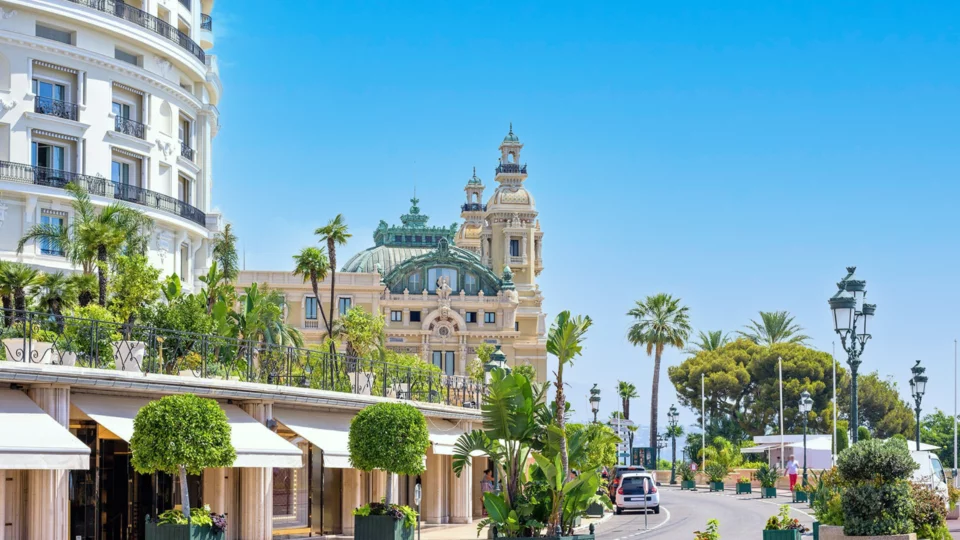
Monte Carlo's stunning skyline overlooks Port Hercules and the Mediterranean, illustrating the unique blend of natural beauty and urban luxury of this iconic district. Nestled in the heart of the Principality, Monte-Carlo is world-renowned for its sunny climate, sublime landscapes and unrivalled luxury lifestyle, attracting a clientele in search of exception. Our agency specialises in the sale of apartments in Monte-Carlo as well as the rental of prestigious properties in the Monte-Carlo district, offering you tailor-made support to carry out your real estate project in the heart of this mythical area.
Bordered by the French Riviera on one side and the sea on the other, Monte Carlo has become synonymous with opulence, elite sporting events and haute couture. Informally, the name often refers to a larger area encompassing adjacent neighborhoods like Larvotto and La Rousse – Saint Roman, home to about 15,000 residents in total. For those who want to get to know the Principality's unique environment better, it is essential to discover Monaco's emblematic districts, each offering a distinct character and way of life.
The prestigious Carré d'Or, the recent extension on the sea Mareterra or the historic majesty of Monaco-Ville, the Rock are among the areas to explore to understand the diversity and charm of Monaco. Other districts such as Fontvieille, the Exotic Garden or La Condamine complete this unique panorama. For those who are thinking of moving there, our guide dedicated to settling in Monaco offers valuable information on the procedures, taxation and daily life in the Principality. You can also find out everything about Monaco thanks to our specialised pages, follow Monegasque real estate news or consult our analyses on the real estate market in Monaco to better anticipate your investments.
Key takeaways: the Monte-Carlo district
Monte-Carlo is the best-known district of Monaco, yet it is not the most expensive per square metre. Here are the 2026 benchmarks to know before buying, renting or investing there.
- The average asking sale price in Monte-Carlo stands at €57,574 per m² in 2026, across all property types, according to Petrini Exclusive Real Estate data.
- Monte-Carlo sits 4% below the average for the Principality of Monaco, which reached €59,929 per m² in 2026.
- Monte-Carlo ranks fifth among Monaco districts by asking price per m² in 2026, behind the Carré d'Or, Larvotto, Port Hercule and Fontvieille.
- The Carré d'Or, a micro-perimeter located inside Monte-Carlo, shows €76,460 per m² in 2026, that is 32.8% more than the Monte-Carlo average.
- Monte-Carlo is a district of the Principality of Monaco developed around the Place du Casino, not an independent city.
- The figures quoted are asking sale prices, recorded on properties offered for sale, not completed transaction prices.
- A district average never sets the price of a single property: in Monte-Carlo, a recent building far exceeds the Carré d'Or average.
In Monte-Carlo, the right question is not what the district is worth, but what the building is worth. Between two addresses three hundred metres apart, the value gap often exceeds the gap between two districts of the Principality.
An overview of Monte Carlo's history
It was in the middle of the 19th century that Prince Charles III set out to transform the destiny of Monaco by developing a luxury complex on the Plateau des Spélugues, a district later renamed Monte-Carlo ("Mont Charles") in his honour. The Casino de Monte-Carlo opened on the Plateau des Spélugues in 1863, after the first gaming rooms had operated elsewhere in the Principality, but the real success came after the opening of a railway line in 1868 that made Monaco accessible to the European elite. In 1866, the district officially took the name Monte-Carlo, and Monaco quickly attracted an influx of wealthy tourists, celebrities, and royalty, forever changing the trajectory of the principality. In 1878, the lavish Monte Carlo Opera House (Salle Garnier) opened next to the casino, designed by the famous architect Charles Garnier who also built the Paris Opera. Monte Carlo quickly became the glittering centerpiece of Monaco, a place where Grand Dukes and Barons rubbed shoulders with artists and adventurers under the gilded ceilings of casinos and theaters.
Over time, the development of Monte Carlo has continued at a steady pace. In the early twentieth century, the district expanded to include elegant boulevards and beaux-arts-style structures, and for a brief period (1911-1917), Monte Carlo even existed as a separate municipality before Monaco's neighborhoods were consolidated into a single city. The legacy of those early days is still palpable: Monte Carlo's legacy of glamour and gambling has helped make Monaco a luxury capital of the world. Today, tradition and modernity blend here: historic sites like the Hôtel de Paris (opened in 1864) sit alongside elegant new skyscrapers, all of which are part of Monte Carlo's unique history.
The Monte Carlo Casino itself deserves a closer look: we cover it in depth in our complete guide to Monte Carlo Casino, tracing its history back to 1863, its 2026 opening hours and prices, the dress code for the gaming rooms, and its real role in the Principality's economy.
Luxury and Lifestyle in Monte-Carlo
Monte Carlo represents the true essence of Monaco, offering an unparalleled concentration of luxury experiences. The neighborhood revolves around the Carré d'Or around the Place du Casino, a square whose recent redesign by architect Michel Desvigne has added elegant aquatic elements (including an installation by artist Anish Kapoor) to an already iconic space. Here, supercars glide along impeccably landscaped gardens and Belle Epoque facades, embodying the glamour that Monte Carlo is known for.
Some of Monte Carlo's most iconic attractions and amenities include:
-
Casino de Monte-Carlo - The sumptuous 19th century casino that has become a symbol of the extravagance and nightlife of Monaco's high society. Its game rooms and architecture are world-famous, attracting those who are eager to experience the atmosphere immortalized in books and movies.
-
Monte Carlo Opera House (Salle Garnier) – An ornate opera house adjacent to the casino, designed by Charles Garnier. This cultural gem hosts opera and ballet in an intimate frescoed auditorium, continuing the tradition of Monte Carlo's high culture.
-
Hôtel de Paris & Hôtel Hermitage – Two mythical five-star hotels with Belle Époque elegance in the heart of Monte Carlo. The Hotel de Paris, dating from 1864, and the nearby Hermitage are renowned for their lavish accommodations and have been home to dignitaries and celebrities for more than a century.
-
Luxury shopping – Designer boutiques line the Carré d'Or, especially along the Allée Princesse Charlène, a chic high-fashion promenade. It is home to the most exclusive fashion and jewelry houses (Chanel, Dior, Cartier, etc.), making Monte Carlo a paradise for buyers of luxury goods.
-
Gastronomy – Gastronomy in Monte Carlo is world-class, with several Michelin-starred restaurants. From the rooftop Le Grill with its panoramic sea view to Yoshi's fine Japanese cuisine, connoisseurs can enjoy a diverse culinary scene. Even the historic Café de Paris brasserie offers classic French cuisine with top-notch people keeping an eye on the Place du Casino.
-
Major Events – The energy of the neighborhood reaches its peak during the headlines. Every spring, the streets of Monte Carlo are transformed into the circuit of the Formula 1 Monaco Grand Prix, bringing adrenaline and glamour. The annual Monaco Yacht Show fills Port Hercules with some of the world's largest superyachts, and the Monte Carlo Rally and the International Circus Festival are other highlights of a busy social calendar. Residents enjoy privileged access to these events, which reinforces Monte Carlo's status as a playground for the world's elite.
Beyond the renowned attractions, Monte-Carlo also offers charms on a daily basis. The neighborhood devotes some of its limited land to green space — about 20 percent of Monaco's land area is lush — offering places like the beautifully manicured Casino Gardens or the Japanese Garden by the sea (at the eastern end of Monte Carlo) for leisurely strolls. With the Mediterranean at its doorstep, the Larvotto district of Monte Carlo even has a rare public beach, allowing residents to swim in azure waters just a short walk from their homes. Safety and security are also paramount; like all of Monaco, Monte Carlo benefits from the principality's low crime rate and a discreet but vigilant police force, which gives it an atmosphere of serenity despite the effervescence of activity. Essentially, living in Monte Carlo means enjoying a luxurious holiday vibe all the time – where one can dine at a different gourmet restaurant each night, attend prestigious cultural events, and stroll through pristine streets lined with exotic cars and public art. It is therefore no wonder that Monte Carlo continues to captivate and enchant those who visit or live there.
Monte-Carlo among the districts of Monaco
Monte-Carlo is not a country: it is one of the districts of Monaco, a sovereign state of which it forms only one part, the best known of them. We set out what the names Monaco and Monte-Carlo actually cover in a dedicated article, from the origin of the name to the real boundaries of the district.
Monaco is divided into several districts, each with its own identity, specificities and role in the economy and local life. In addition to Monte-Carlo, there is the Rock (Monaco-Ville), the historic heart and seat of the Prince's Palace; the Condamine, with its lively port; the Larvotto and its beaches; Fontvieille, a modern district reclaimed from the sea; or the Exotic Garden, on the heights. Each of these sectors contributes to making Monaco a unique place in the world. It is within this whole that Monte-Carlo holds a place of its own, and this is also what explains the particular pressure on its residential market.
Real estate in Monte-Carlo: exclusive and in high demand
Renowned for its exceptional properties, Monte-Carlo is a paradise for luxury real estate investment. In fact, the demand for residences in Monte Carlo is consistently the highest in all of Monaco. This high demand, combined with the extremely limited supply of land in Monaco, has made Monte Carlo one of the most expensive real estate markets on the planet. Top-notch apartments regularly offer spectacular views – whether it's a panorama of the sea, the skyline, or iconic landmarks – and often come with top-notch amenities such as 24-hour concierges, Spa facilities and private parking. It's no surprise that some of the principality's most sought-after addresses can be found in Monte Carlo, from modern skyscrapers to historic Belle Époque buildings.
Real estate prices in Monte Carlo reflect its prestige, but they do not make it the most expensive district in the Principality. The average asking sale price stands at €57,574 per m² in 2026, across all property types, according to Petrini Exclusive Real Estate data, that is 4% below the Monegasque average of €59,929 per m². In the ultra-prime segment, new developments or particularly coveted buildings near the Place du Casino, prices far exceed these averages and reach more than €100,000 per m² for the most extraordinary properties. This means that even modest-sized apartments in Monte Carlo often sell for several million euros. Despite (or perhaps because of) these high prices, real estate in Monte Carlo remains a magnet for wealthy international buyers who appreciate the stability, privacy and prestige that owning in Monaco offers.
The types of properties available range from cozy studios to sprawling penthouses, although space is limited. The skyline of Monte-Carlo has continued to evolve with new luxury projects: for example, the One Monte-Carlo complex opened a few years ago next to the casino, offering ultra-modern apartments and penthouses with direct views of the Place du Casino. Nearby, buildings such as the Résidence du Métropole, Mirabeau and Park Palace offer prestigious apartments with amenities such as swimming pools and gyms, which are very attractive to foreign investors. Although Monte Carlo is mainly known for its apartment living, a few rare villas and townhouses exist in the area (especially on the quieter streets of Monte Carlo's extended district) – these fetch exorbitant prices when they hit the market due to their rarity.
Another aspect of Monte Carlo's real estate scene is its robust rental market . Many high-net-worth individuals choose to rent before they buy, and luxury rental rates are therefore high. It's not uncommon for a well-located two-bedroom apartment to rent for tens of thousands of euros a month, and during big events like the Grand Prix, short-term rental rates skyrocket. In Monte-Carlo, the average asking rent stands at €93.34 per m² per month in 2026, across all property types, according to Petrini Exclusive Real Estate data, against €135.23 per m² per month for the Principality as a whole: as with sale prices, the district sits below the Monegasque average. These are asking rents, not rents recorded in signed leases, which means that a 100 m² apartment commonly rents for around €9,000 and more per month. Owning a rental property in Monte Carlo can therefore be incredibly lucrative, and many investors buy here not only for personal use, but also for the strong capital appreciation and rental yield potential.
Despite its high prices, Monte Carlo continues to attract buyers and investors due to Monaco's advantageous tax environment (no income tax for residents, among other benefits) and the prestige of an address in Monte Carlo. Properties here tend to retain their value and often appreciate, especially as Monaco periodically adds new infrastructure (such as the recent Mareterra land recovery project between Monte Carlo and Larvotto, which has created new luxury residences). In summary, the Monte Carlo real estate market is characterized by extreme exclusivity, fierce competition for top-notch listings, and a steady stream of global millionaires and billionaires looking for a piece of its glamour.
Price per m² in Monte-Carlo in 2026
In Monte-Carlo, the average asking sale price stands at €57,574 per m² in 2026, across all property types. That level places the district fifth among Monegasque districts, 4% below the average for the Principality, which reaches €59,929 per m² over the same period.
Average asking sale prices per m² by district of Monaco in 2026
Petrini Exclusive Real Estate data, 2026 asking sale prices, average across all property types.
| District | Average asking price 2026 (€/m²) |
|---|---|
| Carré d'Or | 76,460 |
| Larvotto | 70,820 |
| Port Hercule | 68,395 |
| Fontvieille | 60,919 |
| Monaco (overall) (benchmark) | 59,929 |
| Monte-Carlo | 57,574 |
| La Rousse - Saint Roman | 55,516 |
| Condamine | 51,833 |
| Monaco-Ville | 46,555 |
| Moneghetti | 46,021 |
| Jardin Exotique | 45,451 |
Table produced by Petrini Exclusive Real Estate Monaco. Petrini Exclusive Real Estate data, 2026 asking sale prices, average across all property types. These are asking prices published on the market, not recorded prices after completion.
These figures are asking prices, meaning the prices requested on properties offered for sale, not recorded prices registered after completion. They measure the level of supply, district by district, at a given moment in the market. Which leaves one question: why the most famous address in the Principality does not top this ranking.
Why the Carré d'Or is 32.8% more expensive than Monte-Carlo
The Carré d'Or shows €76,460 per m² in 2026 against €57,574 per m² for Monte-Carlo: a gap of 32.8%. The most famous name in Monaco is therefore not the most expensive one per square metre.
The explanation lies in geography. The Carré d'Or is not a neighbouring district: it is a micro-perimeter located inside Monte-Carlo itself, a handful of streets around the Place du Casino and the Avenue des Beaux-Arts. The Monte-Carlo average therefore aggregates highly heterogeneous addresses: fully renovated Belle Époque buildings and 1960s residences left untouched, front-line sea views and apartments set back from the water, new penthouses and studios without a view. That dispersion pulls the district average down, far enough to take it below the average for the Principality.
The paradox says a great deal about the Monegasque market: the fame of a name is not the same thing as the price per square metre. Monte-Carlo sells a way of life and a global image; the Carré d'Or sells a handful of streets where scarcity is at its peak.
What a district average does not tell you
A district average describes a market, never a property. It says nothing about the value of a specific apartment, nor about what a buyer will accept to pay for a floor, a view or a residence with genuine services.
The point cuts both ways. In Monte-Carlo, a recent building that is well located and well maintained far exceeds the Carré d'Or average, while an older Carré d'Or address can trade below the Monte-Carlo average. The 32.8% gap between two averages applies to no individual transaction.
This is why we reason building by building rather than district by district: real comparables, memory of the residences and of past sales, knowledge of floors and orientations. That granular reading, built on more than forty years in the Principality, secures the valuation and defends the right price.
Emblematic buildings in the Monte-Carlo district
For investors and residents alike, acquiring an apartment in the Monte-Carlo district gives access to residences offering exceptional services and a world-renowned address. The architectural quality, the services offered and the location of these buildings guarantee a secure investment and a unique living environment. Monte-Carlo benefits from constant demand from international buyers and tenants, ensuring almost non-existent rental vacancy and sustainable property valuation. Here are some of the most emblematic residences that embody the prestige and art of living in Monte Carlo:
- The Millefiori Monaco: The Millefiori is one of the most iconic towers in Monaco, rising to 111 meters with 37 floors. Its slender silhouette offers spectacular views of the sea, the Rock and the rooftops of Monte Carlo. This modern residence offers 24-hour security, 5-level underground parking and bright apartments with beautiful surfaces. Ideal for those looking for a prestigious pied-à-terre or a top-notch rental investment.
- The Victoria Monaco: The Victoria seduces with its unique Art Deco style and its privileged location on the Boulevard de la Princesse Charlotte, a few steps from the Place du Casino. Its 150 apartments are recognizable by their iconic glass rotundas, offering splendid panoramas of the sea and the city. The luxury services and the proximity of Michelin-starred restaurants make the Victoria a residence of choice for epicureans and lovers of Monegasque urban life.
- The Buckingham Palace: The Buckingham Palace, located in the heart of Monte-Carlo, embodies the perfect combination of modernity and refinement. Close to the Casino and its gardens, this building offers a quality concierge service and private parking. The apartments have large terraces, some of which offer a breathtaking view of the sea and the Monegasque coast. It is an ideal choice for those who wish to combine contemporary comfort with a prestigious address.
Thanks to these iconic residences, Monte-Carlo continues to appeal to investors and luxury enthusiasts. Each building embodies a facet of Monegasque prestige, offering an incomparable living environment and a wealth security that is rare on a global scale.
Frequently Asked Questions, Monte-Carlo district (FAQ)
Monte-Carlo: a district or a city?
Monte-Carlo is a district of the Principality of Monaco, not an independent city: the name refers to the area developed around the Place du Casino from 1866 onwards. Its worldwide fame makes it the tourist and social heart of the Principality.
What is the history of Monte Carlo?
Monte-Carlo was created in the 19th century at the instigation of Prince Charles III to revitalise the Monegasque economy. The inauguration of the Casino de Monte-Carlo in 1863 and the arrival of the railway in 1868 attracted the European elite. In 1866, the district officially took the name Monte-Carlo ("Mont Charles") in homage to the prince. It quickly became a mecca for entertainment and luxury, welcoming aristocrats, artists and celebrities.
Why invest or live in Monte Carlo?
Investing or living in Monte-Carlo means enjoying a prestigious address and an incomparable living environment, with luxury hotels, Michelin-starred restaurants, designer boutiques and prestigious events. The district guarantees asset security thanks to sustained rental demand, a scarcity of supply and an attractive tax environment. It is a strategic choice to combine quality of life and solid real estate investment.
What are the real estate prices in Monte Carlo?
In Monte-Carlo, the average asking sale price stands at €57,574 per m² in 2026, across all property types, according to Petrini Exclusive Real Estate data. The district sits 4% below the average for the Principality, at €59,929 per m². Exceptional properties located near the Place du Casino or offering panoramic sea views exceed €100,000 per m².
What are the top attractions in Monte Carlo?
Monte-Carlo is full of emblematic places such as the Casino de Monte-Carlo, the Opéra Garnier, the Hôtel de Paris, the Café de Paris, the Carré d'Or and the Métropole Shopping. The area hosts major events such as the Monaco Grand Prix, the Monaco Yacht Show and the Rose Ball. Its carefully manicured gardens and views of the Mediterranean make it a unique setting to enjoy the Monegasque lifestyle.
Article written by Paolo Petrini, Monegasque real estate expert.
Properties for sale : Monte-Carlo




Properties to rent : Monte-Carlo


These articles might interest you

Surface area of Monaco
More Information

Becoming a resident in Monaco
More Information
Buying Guide
More Information
Surface area of Monaco
What is the area of Monaco The famous principality of Monaco, located in the heart of the French Côte d'Azur and just a few kilometers from Italy, continues to attract citizens from all over the world thanks to its generous Monaco surface area. Its idyllic living environment, the...
Becoming a resident in Monaco
How to Become a Monaco Resident
Buying Guide
The complete buying guide by Petrini Exclusive Acquiring a property is undoubtedly planning, building your future. Our Petrini Exclusive Real Estate Monaco agency, renowned in the Monaco real estate sector for over thirty years, offers its buyer clients experience and in-depth knowledge of the market....