Middle East Instability: Dubai’s Fortunes Look to Monaco
Publié par Paolo Petrini le 05/03/2026
Temps de lecture
10
min.
Living in Monaco
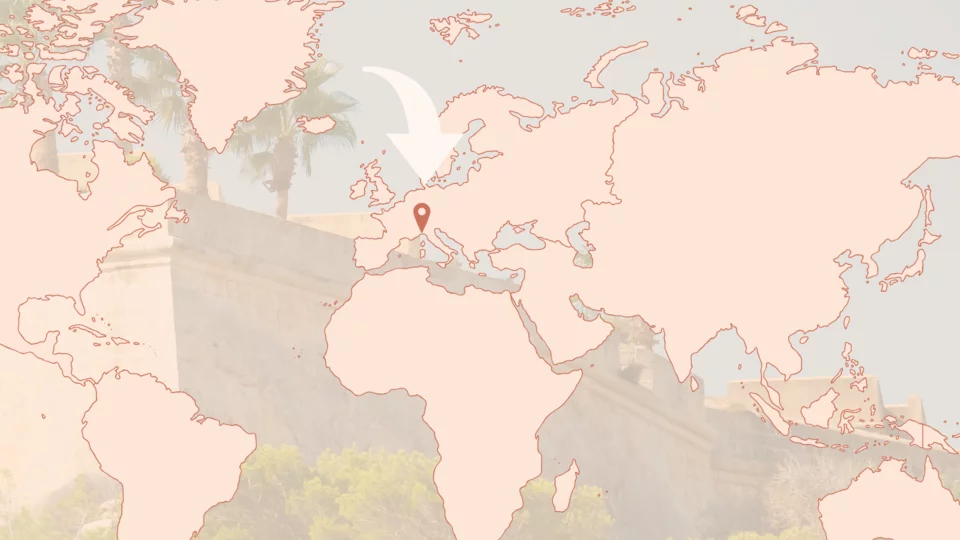
Recent geopolitical tensions in the Middle East have led certain wealthy families based in Dubai to consider establishing a residence in Monaco, widely regarded as one of the most stable and secure jurisdictions in Europe for international residents and long-term wealth preservation.
Discover our selection of apartments
for sale in Monaco
for sale in Monaco
Studios, one- to five-bedroom apartments, penthouses and prestigious properties
For more than a decade, Dubai has established itself as one of the world’s most dynamic economic centres, attracting entrepreneurs, international investors and affluent families. Its attractive tax regime, modern infrastructure and strategic position between Europe, Asia and Africa have helped transform the emirate into a major hub for global capital.
However, in international wealth strategies, geopolitical stability remains an essential factor. Recent episodes of tension in the Middle East remind families with global interests that it may also be relevant to diversify places of residence. Many therefore ask themselves how to become a Monaco resident and obtain a residence card.
In this context, Monaco naturally features in the thinking of certain investors and international family offices. The Principality offers a particularly stable environment, combining security, political continuity and a fiscal framework that has been recognised for decades.
For a more comprehensive analysis of the differences between these two international destinations, you may also consult our comparison between Dubai and Monaco: a lifestyle choice, which examines in detail the economic models, lifestyles and wealth environments of these two major centres.
For families accustomed to managing their wealth on an international scale, establishing a residence in Monaco can represent a strategy of geographic diversification, securing a stable European living environment while maintaining activities in other global economic centres. In this context, the question of a stable, discreet and durably secure European base becomes central for certain great fortunes.
Key TakeawaysMiddle East instability – Monaco as a wealth refuge
Recent regional tensions are reshaping the residential strategies of international wealth. In this context of instability in the Middle East, Monaco appears as a preferred European base to secure mobility, wealth and family stability.
- 🌍 Regional tensions highlight how geopolitics now influences residency decisions among major fortunes.
- ✈️ Disruptions to airspace and logistics underscore the importance of continuity of international mobility.
- 💼 Family offices adopt a strategy of diversifying residency jurisdictions, similar to managing an asset portfolio.
- 🏛️ Monaco stands out for its exceptional institutional and political stability at the heart of Europe.
- 🔒 The Principality offers one of the highest levels of security in the world for international residents.
- 🏡 Structural real‑estate scarcity reinforces Monaco’s value as a durable wealth asset.
- 📍 For Dubai‑based fortunes, Monaco becomes a European base of stability and continuity.
💡 Strategic insight: for international wealth structures, establishing a residence in Monaco can act as genuine geopolitical stability insurance, ensuring a secure European base while maintaining activities in the world’s major economic hubs. Our agency Petrini Exclusive Real Estate offers numerous apartments for rent to begin your relocation.
Regional instability reintroducing the geopolitical factor
For more than a decade, the narrative seemed clear: Dubai had established itself as one of the most powerful magnets for international capital, an ideal fiscal and logistical platform at the heart of a globalised world. For entrepreneurs, investors and affluent families, the emirate embodied a kind of economic oasis, combining attractive taxation, domestic security and global connectivity.
But in the spring of 2026, this perception of invulnerability began to crack. The conversation gradually shifted toward a question many had until then considered theoretical: the reality of geopolitical risk in a historically volatile region.
Several episodes of regional tension, marked by the repeated activation of air‑defence systems in response to drone and missile incursions, have turned this abstract threat into a tangible reality for some residents. Images of interception debris reported near Palm Jumeirah or around central Dubai, widely documented by international news agencies such as Bloomberg and Reuters, have left a lasting impression far beyond the Gulf.
For an ultra‑wealthy elite whose lifestyle depends on international mobility, logistical disruptions have also sent a powerful signal. The temporary closure of airspace and traffic disruptions at Dubai International Airport (DXB) have reminded people that the notion of security for globally mobile fortunes extends well beyond local crime statistics.
As the latest Henley & Partners report on wealth migration points out, wealth security is now also measured by continuity of movement: the ability to travel, move capital and maintain family stability despite geopolitical tensions.
In other words, for internationally diversified wealth, the question is no longer just where to invest but also where one can live and move without friction under any circumstances.
The rise of a geographic “Plan B”
Against this backdrop, the paradigm is evolving. This is not a mass exodus—the economic and fiscal attractiveness of the United Arab Emirates remains a powerful draw—but rather a strategic evolution in the management of international wealth.
Increasingly, family offices are adopting an approach similar to asset‑portfolio management: diversifying residency jurisdictions. Paddy Blewer, an expert in sovereign mobility, notes that wealthy families now seek a “geographic redundancy” to guarantee continuity of lifestyle.
This search for predictability naturally redirects some attention toward Europe, and more particularly toward the Principality of Monaco. While Dubai epitomises hyper‑growth and the dynamism of new global economic centres, Monaco represents, by contrast, a kind of wealth sanctuary characterised by political stability, security and institutional continuity.
A phrase now circulating in international wealth circles encapsulates this logic: “Earn in Dubai, live in Monaco.”
Monaco: the safe haven of continuity
Monaco’s appeal to certain international residents rests on a simple yet rare equation: an exceptionally stable territory at the heart of Europe, endowed with outstanding security and a consistent institutional framework spanning several decades. In a world where geopolitical balances can change quickly, this stability becomes an asset in its own right.
While ultra‑luxury real‑estate prices in the Principality exceeded €57,000 per square metre on average in 2025, according to Eugenia Petrini, an expert on the Monaco market for more than forty years, this premium is no longer viewed solely as a symbol of exclusivity. For many international investors, it now represents a form of stability insurance.
Monaco is often considered a safe haven, that is, a jurisdiction offering political stability, institutional security and economic continuity for international residents and major fortunes.
With more than 30 percent of residents classified as ultra‑high‑net‑worth individuals, Monaco has one of the highest concentrations of great fortunes in the world.
Unlike newer hubs such as Singapore or Dubai, Monaco benefits from historical depth and European integration that offer rare long‑term institutional visibility.
For certain families based in the Middle East, establishing a residential base in Monaco therefore does not mean abandoning the Gulf’s economic opportunities. Rather, it involves securing what matters most: family stability, continuity of lifestyle and protection of wealth in a predictable environment.
In a world marked by uncertainty, the ultimate luxury may no longer reside solely in opulence, but in the certainty that a sanctuary will remain, tomorrow as today, a lasting haven of peace.
Why Monaco emerges as the preferred European base
For families with global economic interests, the choice of a place of residence no longer rests solely on taxation. Several structural factors explain why Monaco regularly features in the deliberations of international family offices.
Exceptional political stability
The Principality of Monaco enjoys institutional stability that is rare in Europe. Its political model—based on a constitutional monarchy and extremely stable institutions—offers a predictability particularly sought after by international fortunes.
In a global context marked by geopolitical tensions and rapid economic cycles, this stability is a decisive factor in long‑term residency decisions.
A level of security among the highest in the world
Monaco is regularly cited as one of the world’s safest jurisdictions. The territory benefits from an extremely dense police presence and an advanced surveillance system, enabling a particularly low level of crime.
For international families, this security makes it possible to maintain a relatively normal lifestyle without the private protection measures often needed in other major world cities.
Structural real‑estate scarcity
Unlike many international financial centres, Monaco cannot extend its territory. This geographic constraint creates structural scarcity on the property market.
This scarcity partly explains why properties in the Principality maintain exceptional value over the long term and are often viewed as a strategic wealth asset.
A European platform for international wealth
Situated in the heart of the Côte d’Azur and a stone’s throw from Nice International Airport, Monaco offers rapid access to Europe’s major capitals.
For international families, the Principality can therefore function as a stable European residential base while allowing economic activities to continue in other regions of the world.
The new geography of the “safe haven”
The analysis of wealth migration flows between the Gulf and the Mediterranean reveals not a simple migration for comfort but a profound shift in the very notion of a safe haven. In an international system that is increasingly fragmented, UHNW families no longer settle for passive security measured by crime indices or fiscal stability. They now seek active security, based on the resilience of critical infrastructure, logistical continuity and the territory’s real geopolitical neutrality.
While Dubai remains one of the epicentres of entrepreneurial dynamism and is capable of attracting global economic flows, the Principality of Monaco reasserts itself as the ultimate tangible asset in a portfolio of international residences. In 2026, wealth arbitration now incorporates a new parameter, geopolitical friction risk, namely the sudden possibility that an airspace might close, a supply chain might be blocked or an anti‑missile defence system might become a visible part of everyday life.
Faced with such uncertainties, Monaco does not only offer a favourable tax framework or a Mediterranean climate. The Principality provides what globalised fortunes seek today: assurance of continuity, the certainty that the institutional framework, security and lifestyle will remain intact whatever turbulence the international system encounters.
For the international resident, the question is therefore no longer simply: where can I make my capital grow? It becomes more fundamental: which territory will guarantee the integrity of my lifestyle when the world’s balance becomes uncertain?
By anchoring a residential base in the Principality, great fortunes are not turning their backs on the dynamism of the Middle East; they are simply introducing a logic of geographic redundancy, comparable to that which already structures their asset portfolios.
In this new geography of risk, true wealth resides not only in the ability to accumulate capital, but in the ability to choose one’s sanctuary and to look forward with the assurance that external events will never dictate its conditions.
FAQ
Middle East Instability: Dubai fortunes look to Monaco
FAQ: Middle East Instability: Dubai fortunes look to Monaco
- Why are some fortunes based in Dubai looking to Monaco?
Recent regional tensions have put geopolitical stability back at the heart of wealth decisions. For families whose lives depend on mobility, a secure European base preserves lifestyle continuity, family safety and institutional predictability without giving up economic opportunities in the Gulf. - Do tensions in the Middle East influence the residence choices of major fortunes?
Yes, because the notion of security goes beyond local crime rates. Family offices now integrate friction risk—the likelihood of logistical disruptions such as airspace closures, temporary restrictions or flow interruptions—that directly affect lifestyle continuity and international mobility. - Why is Monaco considered a safe haven for international wealth?
Monaco combines political stability, very high security and a durable institutional framework within a compact territory connected to Europe. For internationalized wealth, this combination acts as continuity insurance, offering a predictable, stable and discreet environment particularly valued when geopolitical balances become uncertain. - Why does Monaco real estate attract major international fortunes?
Petrini Exclusive Real Estate Monaco notes that structural scarcity in the Monegasque market, linked to geographic constraints, sustains constant demand. For international investors, real estate in Monaco is often perceived as a strategic wealth asset associated with stability, security and continuity of lifestyle. - Is it possible to live in Monaco while maintaining activities in Dubai?
Yes, this is one of the most common arrangements for entrepreneurs and international families. Dubai can remain an operational base for business while Monaco becomes a European residential base focused on stability. This structure allows economic dynamism to be reconciled with long-term lifestyle preservation.
Author

Nos derniers biens disponibles
 9 800 000 €
Riviera Palace · Monte-Carlo
Exceptional apartment with sea views & Casino
In the heart of Monte-Carlo, discover this superb 3-room apartment completely renovated, offering generous volumes and beautiful terraces with remarkable views of the sea and the Casino. A sought-after address, an elegant renovation and a privileged setting to fully enjoy the Monegasque art of living.
 3 600 000 €
Les Lierres · Monte-Carlo
FULLY RENOVATED BOURGEOIS APARTMENT - MONTE-CARLO
In the heart of Monte-Carlo, this elegant 75 m² three-room apartment has just benefited from a complete renovation with contemporary lines. Bright and perfectly arranged, it offers neat services in the privileged setting of a bourgeois building, in the immediate vicinity of all amenities.
 45 000 €
+ Charges
: 5 000
€
45 000 €
+ Charges
: 5 000
€
Le Metropole · Carré d'Or
Luxurious 5-room apartment in the heart of the Carré d'Or - Residence "Le Metropole"
In the luxurious Residence du Métropole, near the Casino de Monte-Carlo, we offer you this magnificent five-room apartment. The property has top-of-the-range services as well as a nice sea view and the gardens.
Recherches fréquentes
Les derniers articles
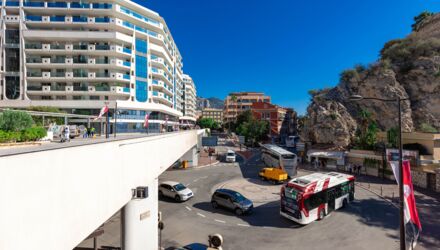


Mareterra Monaco Penthouse: Exceptional Apartments
More Information

Contact our real estate agency in Monaco




In which district would you like to search for your future apartment?