Will the Millionaire Boom Keep Driving Monaco Property Prices Higher?
Publié par Paolo Petrini le 03/08/2026
Temps de lecture
18
min.
Monegasque Real Estate Market
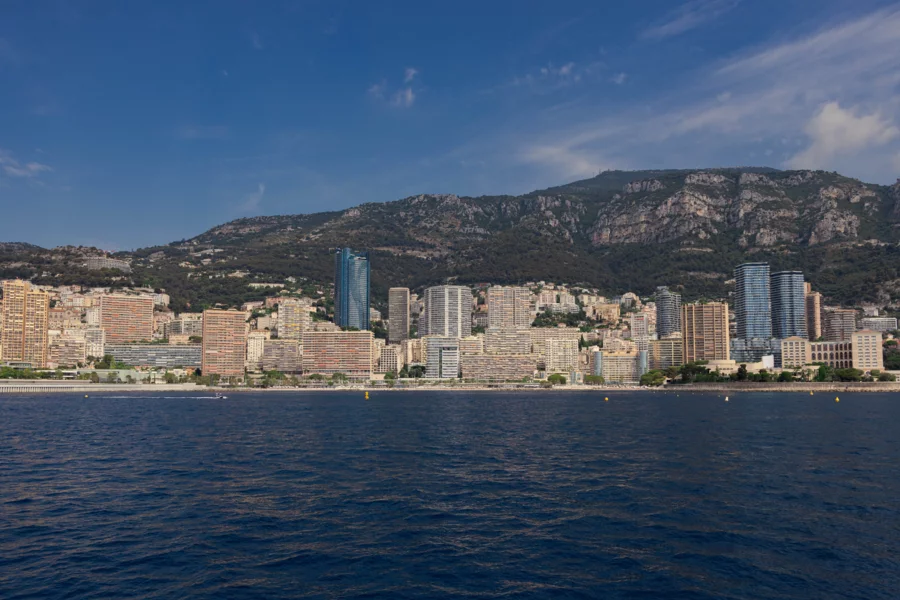
Everything in the available data points the same way: the world created close to one million new millionaires in 2025 according to UBS, while Monaco delivered just 103 new homes on a territory that will never expand at the pace of demand. When demand widens every year against a supply sealed by geography, prices can mechanically move in only one direction over time.
Discover our selection of apartments
for sale in Monaco
for sale in Monaco
Studios, one- to five-bedroom apartments, penthouses and prestigious properties
Yet this mechanism deserves better than a slogan, because it has its nuances, its kinks in the curve and an extraordinary 2024-2025 sequence that needs careful reading. The Global Wealth Report 2026, published by UBS on 30 June 2026, measures global personal wealth: in 2025 it grew by 10.8% in dollar terms, its fastest pace in years, and nearly one million people crossed the one-million-dollar net worth threshold, more than 2,600 a day. The report says nothing about Monaco. But when you do my job, on the market where that wealth eventually converges, you cannot read it as a distant statistic. You read it as an order book.
Key TakeawaysMonaco Property Prices
Millionaires and Monaco Property Prices
The argument of this article is a chain: global wealth is accelerating, it seeks real assets, the most desirable market is Monaco's, and its supply is closed. Here is the data behind each link.
- The world created nearlyone million new millionaires in 2025, more than 2,600 a day, according to the UBS Global Wealth Report 2026; the United Kingdom, France, Spain and Italy alone account for 139,046 of them.
- Against that demand, Monaco holds 208.4 hectares, a stock of 22,577 homes of which 18,197 are private, and an average of 68.4 new deliveries a year over the past decade.
- Monaco's 2025 market: 493 transactions for €5,859.9M, value holding at the record 2024 level, with the average resale price rising to €7.6M (+26.8%, a record).
- The Mareterra sequence produced two exceptional new-build years (€3,681.2M in 2024, €2,610.2M in 2025) before the stock ran out: not a single new-build sale in the fourth quarter of 2025.
- Over the long run, the annual value of transactions rose from €603.8M in 2006 to €5,859.9M in 2025 according to Monaco's statistics institute IMSEE, a more than ninefold increase in nineteen years.
- Demand is changing in nature: Monaco is no longer a stopover but a family base, visible in the weight of large apartments (five-room-plus units resell for €29.0M on average, +54.1%) and in the 32.8% ten-year decline of transactions under €5M.
- The published average price of €57,569 per m² for 2025 rests on a brand-new IMSEE methodology, not comparable with earlier editions: its apparent 1.4% dip does not describe a declining market.
Petrini tip: you do not buy in Monaco for rental yield, you place capital there as you would subscribe to a first-rank signature. The right horizon of analysis is the decade, and the right indicator is not the average price per m² but the depth of demand in the segment where your property sits.
One Million More Millionaires in a Year: the Wealth Wave UBS Describes
Let us start with the fact before the interpretation. The UBS ranking covers 31 countries by the number of dollar millionaires added between 2024 and 2025. The United States dominates by a wide margin with 441,078 new millionaires, nearly half the world total, carried by its equity markets. But viewed from the Rock, the decisive information lies elsewhere: the United Kingdom adds 43,139 millionaires, France 34,604, Spain 32,707,Italy 28,596, Germany 24,263, Russia 21,951, Switzerland 8,907. New wealth is not created only in San Francisco or Singapore. It is created massively in the countries surrounding Monaco, whose nationals already make up the Principality: the 2025 census by Monaco's statistics institute IMSEE counts 38,857 residents of 144 nationalities, with French, Italian, British, Swiss and Russian citizens in the leading ranks behind the Monegasques.
Let us be rigorous about what these figures do and do not say. UBS measures net wealth in dollars, and part of Europe's 2025 progression owes more to currency movements than to real enrichment. A one-million-dollar net worth makes a statistical millionaire, not a Monaco buyer: here, the entry ticket sits several notches higher. These caveats reduce the scale of the phenomenon. They change neither its direction nor the question it raises: where will all this money go?
Where New Money Goes: the Real-Asset Reflex
Newly built wealth almost always follows the same trajectory. In the early years it stays in what created it: the company, the markets, the shareholdings. Then comes the moment of consolidation, when part of the capital leaves the risk that produced it to move into assets that preserve it. Gold, top-grade bonds, and real estate, though not just any real estate: the handful of world addresses whose value rests on a scarcity nobody can manufacture. London, New York, Geneva and Dubai compete for that role. Monaco holds a place apart among them, for reasons that owe nothing to sentiment.
I observe this behaviour every week in the files we receive. The question our clients ask is almost never "what does it yield?", it is "where will my capital be best protected, and best positioned for the next generation?". You do not buy a Monaco apartment for its rental income; that is neither the point nor the mentality of this market. You place money there as you would subscribe to a bond from an irreproachable issuer: not for the coupon, for the signature. The signature, here, is the stability of an independent state and the certainty that no new square metre will ever dilute the value. It remains to be understood why, among all the destinations competing for this capital, the Principality absorbs the deepest demand.
Why Monaco Tops the List for Great Fortunes
Because no other jurisdiction gathers in one place what Monaco offers together. Every major hub has one argument; the Principality combines them all, and that combination is what gives its demand such depth.
Taxation first, the best known: the absence of personal income tax for residents, French nationals excepted, is not a recent scheme that a change of government could sweep away; it dates from 1869 and has weathered every European cycle since. Geography next: Monaco sits at the centre of Europe without being in the European Union, a sovereign state thirty minutes from Nice airport and a two-to-three-hour flight from every capital where UBS locates wealth creation. Security, a decisive argument for families whose fortune is public knowledge, is among the highest in the world. Add a Mediterranean climate that allows outdoor living most of the year, schools and services calibrated for a demanding international population, and a hub effect that feeds on itself: the concentration of wealth attracts private banks, family offices and advisers, whose presence in turn attracts new wealth. According to New World Wealth research relayed by Henley & Partners, more than 40% of Monaco residents are millionaires, a ratio without equal anywhere in the world. In Monaco, the neighbourhood is part of the asset.
Against this cumulative demand, the supply. The Principality measures 208.4 hectares, 3,344 metres at its longest, 1,140 metres at its widest, and its 2.08 km² of surface area grows only by reclaiming land from the sea, at the rate of one operation per generation: six hectares for Mareterra, delivered at the end of 2024, after Fontvieille in the 1970s. The housing stock counts 22,577 homes as of 31 December 2025, of which 18,197 are private, the 4,380 state-owned units being reserved for nationals. And over the past ten years, 684 new homes were delivered in total, an average of 68.4 a year. Set that figure against UBS's million new millionaires a year: sixty-eight homes. The imbalance is not an opinion, it is a division.
What Twenty Years of IMSEE Data Say About This Mechanism
The scarcity theory would be fragile if the data did not confirm it. It confirms it across the full available depth. The IMSEE series, which we track year after year, take the total value of Monaco property transactions from €603.8M in 2006 to €5,859.9M in 2025 : multiplied more than ninefold in nineteen years, doubled over the last decade alone. Few assets in the world offer such a trajectory backed by an underlying as tangible as the land of a sovereign state.
The year 2025 itself, which some headlines summed up as "sales are falling", deserves a line-by-line reading, because it illustrates the mechanism better than any recent year. The resale market, the only segment where supply existed, delivered: 429 resales, up 17.5%, for €3,249.7M, up 49.1%, the first time resales have crossed the three-billion mark in history. The average resale price reached €7.6M, an all-time record, up 26.8%. New-build sales, for their part, stopped in the fourth quarter not for lack of buyers but for lack of product: 42 sales in the first quarter, 15 in the second, 7 in the third, zero in the fourth, at an average price lifted to €40.8M, the first time above 40 million. A cooling market slows down. A market that stops dead has sold everything.
The Monaco property market in 2025
Source: Observatoire de l'Immobilier 2025, IMSEE, published in February 2026. Scope: private residential sector, Principality of Monaco.
| Indicator | New-build | Resales | Petrini benchmark |
|---|---|---|---|
| Number of transactions | 64 (−36.6%) | 429 (+17.5%) | The new-build decline reflects exhausted stock, not demand |
| Total value | €2,610.2M | €3,249.7M (+49.1%) | First time above €3 billion on the resale market alone |
| Average price per transaction | €40.8M (+11.9%) | €7.6M (+26.8%) | Two simultaneous records in the same year |
| Transactions above €20M | 35 of 64 | 22 of 429 | An unprecedented level on the resale market |
| Whole market | 493 transactions for €5,859.9M | Volume up 5.8%, value holding at the record 2024 level | |
Table by Petrini Exclusive Real Estate Monaco. The "sales" and "resales" categories follow IMSEE definitions. The Petrini benchmark column is the agency's qualitative reading; it is not part of the data published by the institute.
The Mareterra Effect: an Exceptional Boom That Must Not Be Extrapolated
Any honest thesis must isolate what, in the recent figures, is exceptional. The 2022-2025 sequence is one, and it has a name: Mareterra, together with Testimonio II and Bay House. The marketing and delivery of these developments produced unprecedented new-build years: €1,190.3M of new-build sales in 2022, €1,041.3M in 2023, €3,681.2M in 2024, an absolute record year, then €2,610.2M in 2025 on the final units. Six hectares reclaimed from the sea shifted, on their own, the curve of the Monaco market. Anyone projecting the coming years by extending those vintages makes the same mistake as an analyst extrapolating a company's revenue from the year of an exceptional disposal.
My professional reading is therefore the following, and I state it with the caution required by a market of a few hundred transactions a year, where any projection remains an opinion. The underlying trend remains upward, because its two engines, growing global demand and closed supply, are intact; but its pace will most likely be steadier than during the Mareterra interlude, which compressed a generation of new supply into three years. I would add a methodological safeguard that too many commentators ignore: the published average price of €57,569 per m² for 2025 comes from a methodology that IMSEE has just entirely rebuilt, a regression across all sales and resales which, by the institute's own admission, rules out any comparison with previous editions. Its apparent 1.4% dip therefore does not describe a receding market. The detail of the same report, which we cross-check against our survey of prices per m² in Monaco, says the opposite: the Larvotto has just crossed €70,000 per m², the first district in Monaco's history at that level, and buildings delivered since 2020 change hands at €65,602 on average.
Professional insight
The headlines that greeted the release of the Observatoire 2025 focused on the new-build pullback and the lower average price per m². Taken in isolation, those two figures suggest a market turning down. Read against the rest of the report, they describe the opposite: resale value at an all-time record, an average resale price up by more than a quarter, and new-build sales stopping for want of available units. Mistaking a contraction of supply for a contraction of demand is the most common misreading of this market. The latter would be a warning signal; the former is the very definition of scarcity.
The Signal I Watch Before All Others: Monaco Is Becoming a Base, No Longer a Stopover
Statistics measure yesterday's demand; the profile of buyers announces tomorrow's, and this is where the UBS report meets what we experience on the ground. Monaco is no longer the address where one spends the winter, nor the destination of a gilded retirement. It is a place where people settle to build. The files we handle are increasingly driven by entire families seeking large apartments to establish their base, their children's schooling and their business life, and who compare Monaco not with a seaside resort but with London, New York, Geneva or Dubai. The new generations of developments understood this before anyone: ever larger family layouts, private hotel-style services, amenities modelled on the best of the great wealth capitals. Monaco's supply is moving upmarket because demand has changed its life plan.
The structural figures confirm what we see in meetings. The average resale price of a five-room-plus apartment reached €29.0M in 2025, up 54.1% in one year: ten million euros gained in twelve months on the family format par excellence. The 22 resales above €20M constitute an unprecedented level, more than doubled in ten years. Conversely, transactions under €5M have fallen 32.8% in ten years: the market is not losing value, it is losing its entry level, absorbed by buyers who combine, convert and enlarge. Geography follows: Monte-Carlo has just crossed one billion euros of annual resales for the first time with €1,129.9M, the Larvotto concentrates €851.9M across thirteen transactions, and the tight perimeter where the largest deals are done is one we have mapped under the name of the Billionaires' Triangle.
As for the addresses international buyers request by name before even a first visit, the apartments for sale in Mareterra have become their purest example.
We describe more broadly these profiles of great fortunes settling in the Principality in a dedicated analysis.
So, Will Prices Keep Rising?
Let me frame the answer as an investor would, separating what can be demonstrated from what is a bet. Demonstrable: global demand in structural expansion, documented by UBS vintage after vintage; supply closed by geography, documented by IMSEE delivery after delivery; twenty years of series in which the market's value has been multiplied by nine; and a continuous shift of transactions towards the top end. A bet, and it will always remain one: the pace. Nobody can promise the slope of a market this narrow, where a handful of deals moves the averages, and I refuse to announce a price level by a given date, the question of the €100,000 per m² threshold having shown how much nuance such projections require.
"Everything in the available data points the same way: the world created close to one million new millionaires in 2025 according to UBS, while Monaco delivered just 103 new homes on a territory that will never expand at the pace of demand. When demand widens every year against a supply sealed by geography, prices can mechanically move in only one direction over time."
Paolo Petrini · Petrini Exclusive Real Estate
But when I am asked, and I am asked every week, whether this is the right moment to place capital in Monaco property, my answer lies in the nature of the asset. An apartment in Monaco is not a yield play; it is a store of value backed by a stable state, a strong currency and a scarcity nobody can manufacture, and history shows it rides through cycles where other markets endure them. Over a horizon of ten, twenty or thirty years, the only question that matters is whether global demand for that combination will weaken. The UBS report has just answered for 2025: it grew by 2,600 people a day. Three indicators will tell whether this reading holds over time: the calendar of upcoming new-build deliveries, the resilience of the above-€20M segment, and IMSEE's Observatoire 2026, expected in February 2027, the first vintage truly comparable in the new price series.
Investing Well in a Market of Shortage Cannot Be Improvised
There remains the practical question, the one separating conviction from execution: how does one enter well a market where supply is lacking? By reversing the usual reflex. In a scarce market you do not start by looking for a property, you start by making yourself able to seize the one that will come along: file ready, acquisition structure settled, advisers appointed, and access to the opportunities that trade before any advertising. Then comes the discipline of comparables, because a market whose official average explains only part of real prices is a market where you can pay very well or very badly for the same square metre, depending on the building, the floor, the exposure and the history.
A search we are running at this very moment illustrates the real speed of this market. A client wished to visit an apartment offered at around €25M in Bay House, the Larvotto's most recent residence: by the time I reached the owner, he had just signed a preliminary sale agreement. At that level of the market, no comparable four-room apartment was available in the building that week; the situation can change from one week to the next, and that is precisely the point. Even at 25 million euros, an exceptional property does not wait for you. It is exactly in these situations that the depth of our portfolio and our knowledge of the owners make the difference: the client is currently viewing other first-rank properties we opened up for him straight away, and that is our definition of the job, always one solution ahead, never a search at a standstill.
This is exactly where the choice of adviser is decided, and it is the strength we have built at Petrini: building-by-building knowledge fed by more than forty years of Monaco transaction archives, the memory of the residences and of the prices actually paid, and the discipline of publishing recurring, sourced analysis when most of the market settles for mood commentary. Whether your project is a wealth placement, a family relocation or both at once, our work begins with understanding your situation and continues by giving you the quantified reference points that distinguish a great address from a merely expensive one. Global capital has already chosen its destination. The only decision still yours is the quality of your point of entry.
FAQMonaco Real Estate
Frequently Asked Questions: Millionaires and Monaco Real Estate
- How many new millionaires did the world create in 2025?
Close to one million, more than 2,600 a day, according to the Global Wealth Report 2026 published by UBS on 30 June 2026. The United States accounts for 441,078 of them, nearly half the world total, ahead of the United Kingdom (43,139), France (34,604), Spain (32,707) and Italy (28,596). Most of Europe's new wealth is therefore created less than a three-hour flight from Monaco. - Why do great fortunes buy in Monaco?
Because no other jurisdiction combines what Monaco brings together: no personal income tax for residents (French nationals excepted) since 1869, security among the highest in the world, a central position in Europe without belonging to the European Union, a Mediterranean climate, international schools and services, and the stability of a sovereign state. More than 40% of Monaco residents are millionaires according to New World Wealth research, the highest ratio in the world. - Will property prices in Monaco keep rising?
The underlying trend remains upward: global demand widens every year while supply stays closed by geography, with an average of 68.4 new homes delivered per year over the past decade. The annual value of transactions rose from €603.8M in 2006 to €5,859.9M in 2025 according to IMSEE. The pace of the coming years remains unpredictable, however, on a market of a few hundred transactions, and no figure-based projection can be guaranteed. - Do people buy in Monaco for rental yield?
No, that is not the logic of this market. According to Petrini Exclusive Real Estate Monaco, Monaco property is bought as a store of value: capital placed in a rare asset, backed by a stable state and a strong currency, with preservation and transmission over ten, twenty or thirty years in mind. Any appreciation is the outcome sought, never an immediate rental yield. - What is the Mareterra effect on the Monaco property market?
The marketing and then the delivery at the end of 2024 of Mareterra, six hectares reclaimed from the sea, produced unprecedented new-build years: €3,681.2M in 2024, an absolute record, then €2,610.2M in 2025 before the stock ran out, with zero new-build sales in the fourth quarter of 2025. This exceptional peak shifted the market's curve and must not be extrapolated: it represents a generation of new supply compressed into three years.
Author

Nos derniers biens disponibles
 9 800 000 €
Riviera Palace · Monte-Carlo
Exceptional apartment with sea views & Casino
In the heart of Monte-Carlo, discover this superb 3-room apartment completely renovated, offering generous volumes and beautiful terraces with remarkable views of the sea and the Casino. A sought-after address, an elegant renovation and a privileged setting to fully enjoy the Monegasque art of living.
 3 600 000 €
Les Lierres · Monte-Carlo
FULLY RENOVATED BOURGEOIS APARTMENT - MONTE-CARLO
In the heart of Monte-Carlo, this elegant 75 m² three-room apartment has just benefited from a complete renovation with contemporary lines. Bright and perfectly arranged, it offers neat services in the privileged setting of a bourgeois building, in the immediate vicinity of all amenities.
 45 000 €
+ Charges
: 5 000
€
45 000 €
+ Charges
: 5 000
€
Le Metropole · Carré d'Or
Luxurious 5-room apartment in the heart of the Carré d'Or - Residence "Le Metropole"
In the luxurious Residence du Métropole, near the Casino de Monte-Carlo, we offer you this magnificent five-room apartment. The property has top-of-the-range services as well as a nice sea view and the gardens.
Recherches fréquentes
Les derniers articles

Monaco Real Estate Market Review in 2024
More Information

Contact our real estate agency in Monaco




In which district would you like to search for your future apartment?