Monaco property: the buying cycle has begun
Publié par Paolo Petrini le 08/09/2026
Temps de lecture
22
min.
Monegasque Real Estate Market
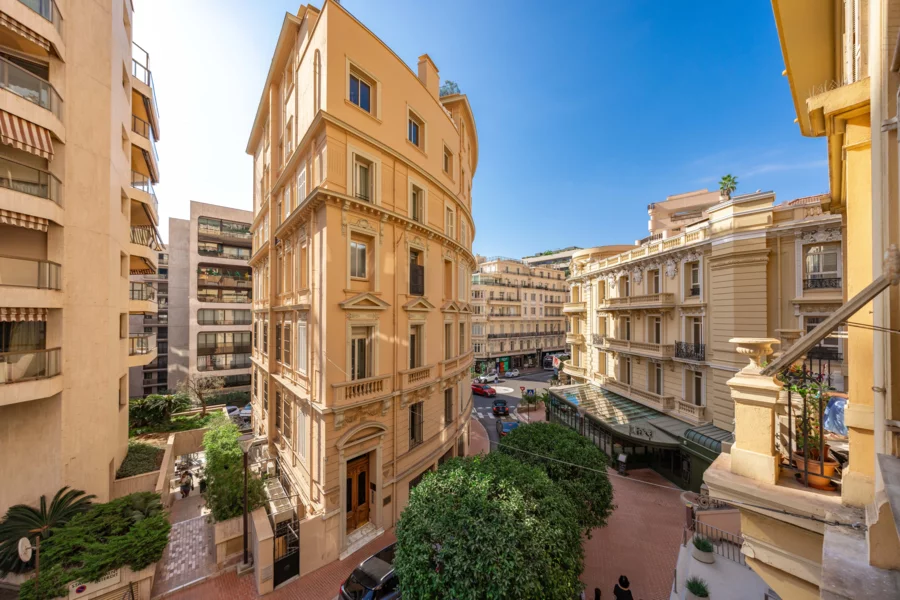
In our reading, Monaco's property market is entering a buying cycle: rents pushed to unprecedented levels, resales up 17.5% in 2025 to a record 3,249.7 million euros, and a housing stock that geography prevents from expanding at the pace of global wealth.
Discover our selection of apartments
for sale in Monaco
for sale in Monaco
Studios, one- to five-bedroom apartments, penthouses and prestigious properties
There is a sentence every property professional in Monaco hears at the first meeting, and one that Eugenia Petrini, the founder of our agency, was already hearing when she started out: “Yes, but at these prices, it is bound to collapse eventually.” She heard it when the square metre changed hands at around 15,000 euros. We still hear it above 57,000. In between, the market has more than tripled.
This article does not set out to refute that prophecy; time has taken care of it. It sets out a more precise line of reasoning, one that our agency inherited from its founder and that three years in the field have led us to take up again: the reasoning of cycles. For three years, the pressure of demand bore on the rental market. We believe it is now shifting towards purchase. The statistics do not show it yet, and we will explain why they cannot show it yet. Here is that reasoning, step by step, with the figures that support it and those that weaken it. This analysis is dated 8 September 2026; it precedes by eight days the publication by IMSEE, Monaco's official statistics institute, of its Bulletin de l'Économie for the second quarter, expected on 16 September 2026.
Key Takeaways: buying in Monaco at the turn of the cycle
The facts on which our reading of a change of cycle rests, with their sources, and what they do not yet prove.
- In 2025, the Monegasque market swung from new-build to existing homes: 429 resales, up 17.5%, for 3,249.7 million euros, an all-time record according to IMSEE.
- New-build sales fell back to 64 transactions, for want of schemes to deliver after Mareterra and Bay House.
- The rental phase of 2023 to 2025 pushed rents to record highs: increases of 8 to 15% recorded by Petrini Exclusive Real Estate over the first eight months of 2025.
- On three-bedroom apartments, the ratio of annual rent to purchase price rose from around 2.1% in 2019 to around 2.5% in the first half of 2026, based on the asking prices we have tracked since 2008.
- Supply is frozen: 22,577 homes according to the 2025 IMSEE census on 2.08 km², of which 4,380 are State-owned units reserved for Monegasque nationals, and 684 new homes delivered in ten years.
- Demand, meanwhile, keeps growing: UBS counts close to one million new dollar millionaires in 2025, more than 2,600 a day.
- The statistics do not yet validate the thesis: 104 resales in the first quarter of 2026 for 531.2 million euros, down 18.8% on an exceptional Q1 2025, but above the average of the past ten years, according to IMSEE.
Our conviction is not about rising prices, which nobody can promise. It is about competition: if part of rental demand turns into purchase demand, the best apartments in the best buildings will become more contested before the indices record it.
“It is bound to collapse eventually”: what eighteen years of Monaco prices have answered
The prophecy of collapse has never been disproved by an argument. It has been disproved by time. According to our calculations based on the Observatoire de l'immobilier reports published by IMSEE, the average resale price rose from €14,784 per square metre in 2006 to €51,967 in 2024, a multiplication by roughly 3.5 in eighteen years. Over that period, no correction has erased the underlying trend.
That does not make it a straight line. The early 2010s were a long plateau, with prices barely moving for four or five years. In the spring of 2020, transactions froze for several months and the question of whether clients would return was asked in earnest. They returned. The Monegasque market knows pauses, sometimes long ones; it has not known a rout. What our tracking of the evolution of the price per square metre in Monaco, district by district, shows is a curve that breathes, not a curve that breaks.
One still has to know what one is comparing, and a precaution is needed here, one almost always omitted when the figures are picked up by the press.
The price-per-square-metre series has changed method
Up to the edition covering 2024, IMSEE calculated the price per square metre from resales alone. The edition published in February 2026, covering 2025, rests on a regression model that includes every transaction for which the floor area is known, new-build sales included, and takes the construction period into account. The whole historical series has been recalculated.
The institute states expressly that this change prevents any comparison with the prices published in previous editions of the Observatoire. The €51,967 of 2024 and the €57,569 of 2025 therefore do not belong to the same series. Under the new method, the 2024 comparable is €58,402.
This break explains some of the hasty readings published since February. Above all, it requires reasoning on what remains comparable from one year to the next: volumes and amounts. We will return to this.
But knowing that the market is not collapsing says nothing about where demand is heading. Yet that question, not the question of a bubble, is what decides what a buyer should do today. To answer it, we need to return to the reasoning of our agency's founder.
Cycles according to Eugenia Petrini: why renting precedes buying
Property moves in cycles. Eugenia Petrini, who founded our agency more than forty years ago, was not talking about macroeconomics when she said so. She was talking about what she saw pass through her meetings: years in which everyone was looking to rent, then years in which the same people were looking to buy. A property cycle, in the sense in which we use the term, is the alternation of phases during which demand bears mainly on renting, then mainly on buying, driven by the gap that opens between rents and prices. The reasoning has three stages, and it deserves to be set out in black and white because everything else in this article follows from it.
First stage: when demand arrives faster than supply, it turns first to renting, because renting is quick, reversible and requires no knowledge of the market. Rents rise. Second stage: once they have risen far enough, the annual rent represents a share of the purchase price that households with the capital no longer find reasonable to pay while owning nothing. They switch. Third stage: that switch moves the pressure from renting to buying, and the cycle closes until the next one.
This is not a law. It is a regularity she had observed and that we have seen repeat itself since. It holds in many cities. But in Monaco, where supply never answers demand, the pendulum swings further in each direction, and that is what makes the moment of the switch so important for anyone considering a purchase.
If this reasoning is right, the first thing to check is the rental phase. Did it take place, and with what intensity?
Three years of rental pressure in Monaco: the facts
The rental phase did take place, and with an intensity we had not seen before. From 2023 to 2025, several forces combined. Large-scale building works forced entire families to find new homes at short notice. The British tax reforms, followed by the Swiss and Dutch adjustments, brought new residents who, not yet knowing the buildings, did what all newcomers do: they rented. Available supply did not keep pace, and rents did what rents do when the queue lengthens.
Our internal study of August 2025, detailed in our analysis of the Monegasque rental market, recorded increases of 8 to 15% since the start of the year on the re-lettings we had handled.
Our records of asking prices, kept month after month since 2008, give the measure of the gap. On three-bedroom apartments in Monaco (four rooms in the local convention), the asking rent rose by around 32% between 2019 and the first half of 2026, while the asking sale price rose by around 11%. These are asking prices, not completed prices, and they are not to be confused with IMSEE's notarial statistics. But a gap of this size, sustained over seven years, is no accident of measurement. It is a spring being wound.
The first condition of the cycle is therefore met. The second is arithmetic, and it is the one now playing out in the families we receive.
The tenant's arithmetic: when the rent catches up with the purchase price
When rent rises three times faster than the purchase price, the comparison between renting and buying changes in nature. On the three-bedroom segment, the ratio between the annual rent paid and the capital that would have to be tied up rose from around 2.1% in 2019 to around 2.5% in the first half of 2026, according to our records. Put simply: each year of renting costs a growing share of the price of the apartment one is not buying.
This does not remain an abstraction. Since the start of the year, the same situation has come up in our meetings with a regularity that surprised us at first. A family settled for three or four years receives the proposal to renew its lease, or has to change apartment because the children have grown, and discovers the level of the market. The proposed rent exceeds the threshold it had set itself. It then asks a question it was not asking in 2022: what if we bought? This is no longer an investor's hypothesis. It is a household decision, and it is exactly the second stage of the reasoning.
One must resist here the temptation to conclude that buying is systematically preferable to renting. That would be wrong. A gross rental yield of between 2 and 3% remains low, and on its own it justifies nothing. Acquisition costs, holding period and the liquidity specific to each building weigh heavily in the decision. What we tell these families is what we apply in our own decisions: in Monaco, one does not reason in terms of yield, one reasons in terms of scarcity. The wealth case for buying does not rest on the rent one no longer pays, but on the preservation of value, on liquidity at resale and, perhaps, on long-term appreciation that nobody can guarantee. And it is judged at the level of the building and the floor far more than at that of the price per square metre: two apartments of the same size, in two neighbouring residences, do not resell at the same pace or at the same price.
Two conditions out of three. The third is the one that sets Monaco apart from every city where this reasoning applies: here, supply cannot respond.
A million millionaires a year against Monaco's 2.08 km²
The fundamental imbalance of the Monegasque market comes down to two figures that do not speak the same language: close to one million new millionaires a year worldwide, 684 new homes in ten years in Monaco. The UBS Global Wealth Report 2026 estimates that global private wealth grew by 10.8% in 2025 and that close to one million new dollar millionaires appeared in a single year, more than 2,600 a day. We have set out elsewhere what this global boom in millionaires implies for the Principality; let us keep the order of magnitude in mind here.
Opposite that, supply hardly moves. The 2025 census counts 22,577 homes across the whole Principality, of which 18,197 are private and 4,380 State-owned, the latter reserved for Monegasque nationals. Over ten years, 684 new homes have been delivered, or 68.4 a year. A development such as Mareterra can add around a hundred units and raise the quality of the stock. It does not change the constraint: 2.08 km², and the sea as the only land reserve.
That is what makes the comparison with Dubai, so often invoked, largely misleading. Dubai answers global demand by raising towers and whole districts from the ground; its market adjusts through supply. Monaco cannot. Its market adjusts through price and through the selection of buyers, which is why a few hundred metres, what we call the Billionaires' Triangle, concentrate so considerable a share of the value. A fixed stock facing demand that grows by a million households a year: there is nothing mysterious about the mechanism, and it explains why the turn of the cycle, here, never finds new supply to cushion it.
That wealth still has to move, and to move towards Monaco. Since 2025, it has.
What those arriving from London tell us: the mobility of great fortunes towards Monaco
Since the abolition of the non-dom regime, effective on 6 April 2025, a date few readers in London will need reminding of, a movement of mobile capital has been under way towards a small number of European destinations. The Wealth Report 2026 observes that this reform has steered wealthy clients towards Monaco, Italy and Switzerland, all three named. The United Kingdom replaced the old regime with a residence-based arrangement limited to four years, known as the FIG regime; for some of those it targeted, the question was no longer whether to leave, but where to go.
The international press often reduces this movement to tax. In our conversations with these families, tax is a matter already settled by their advisers before they walk through our door. What they want to understand is something else: the stability of a monarchy whose decisions are taken with the long term in view, everyday security, the international schools, France and Italy a few minutes away, a dense banking and wealth-management ecosystem, and the possibility of living at the centre of Europe without being inside the European Union. Our report on Ultra High Net Worth Individuals in Monaco describes these profiles in detail.
In a decade in which political and regulatory instability has become a permanent parameter, this combination has acquired a value it did not have ten years ago. For these clients, Monegasque property is no longer merely an asset; it is a fixed point. And what matters for our reasoning is that some of them no longer go through the rental phase at all. We will return to this.
The scene is set. It remains to check whether the official figures already bear the trace of what we describe. The answer is yes for 2025, and not yet for 2026.
What the 2025 statistics already show: the swing towards existing homes
The first trace of the swing lies in the 2025 figures, provided one looks at the composition of the market rather than its average. Monaco recorded 493 transactions for around 5.9 billion euros, an amount stable against the 2024 record. But behind that stability, everything changed place. Sales of new homes fell to 64, for want of schemes to deliver. Resales rose by 17.5% in number and by 49.1% in value, crossing the three-billion mark for the first time.
A market in which new-build fades and existing homes surge is a market in which demand has moved towards the purchase of existing properties. That is the salient fact of the year, far more than the average square metre, and we had already noted it in our analysis of the Monegasque property market in 2026, where capital can be seen concentrating on a limited number of addresses.
Monaco in 2025: new-build fades, existing homes take over
Source: IMSEE, Observatoire de l'immobilier 2025, published in February 2026. Calendar year 2025, private residential market.
| Indicator | 2025 figure | Petrini's reading |
|---|---|---|
| Whole market | 493 transactions, €5.9bn | Amount stable at its highest level on record |
| New-build sales | 64 sales | Deliveries scarce after Mareterra and Bay House |
| Resales | 429 transactions, up 17.5% | The secondary market is once again the engine of volume |
| Resale value | €3,249.7m, up 49.1% | Three billion euros exceeded for the first time |
| Average resale price | €7.6m, up 26.8% | Large apartments pull value upwards |
| New homes delivered | 103 in 2025, after 159 in 2024 | 684 homes in ten years, or 68.4 a year |
Table by Petrini Exclusive Real Estate Monaco. Official IMSEE data; the right-hand column expresses our professional reading and does not commit the institute.
Mareterra will be raised as an objection, and the objection is partly well founded. The offshore extension brought hitherto unknown values into the statistics and shifted the centre of gravity of Monaco's top end; the assessment we drew up a year after its inauguration was already measuring its scale. But Mareterra was never the market. It was its accelerator, and an accelerator, by definition, eventually eases off. That leads us to a reading which, to our knowledge, the press has not yet formulated.
A falling average is not a falling market
Mareterra and Bay House brought into the calculation new, exceptional properties sold far above the average of the stock. With those schemes delivered, they are progressively dropping out of it. Mechanically, the average price per square metre may normalise in the coming publications without a single owner having lowered a price.
This is a composition effect, not a market movement. Our reading is that the level of prices holds high while the statistical curve flattens, and that transaction volume, for its part, continues to grow. Distinguishing the two is the condition of an honest reading of the Monegasque market.
If 2025 bears the first trace of the swing, 2026 should bear the second. Yet the first quarter seems to say the opposite. It is worth looking at why.
2026: the ground is ahead of the IMSEE statistics
The statistics published to date do not prove an acceleration in sales in 2026, and that must be stated plainly. In the first quarter, IMSEE recorded 104 resales for 531.2 million euros, 18.8% fewer transactions than in the first quarter of 2025. The amount fell further still, by 27.7%, which is largely due to the absence of exceptional deals: only two new-build sales over the quarter.
The comparison nonetheless deserves its frame. The first quarter of 2025 was an exceptionally high base. Set against the average of first quarters over the past ten years, around 100 transactions for 514.2 million euros, the start of 2026 sits slightly above the ten-year norm. This is not a reversal. It is a return to a sustainable base after two years out of the ordinary.
Above all, property statistics are structurally behind the market they describe. A resale published in the first quarter was negotiated the previous autumn, sometimes earlier. What an agent sees before anyone else is the incoming enquiries, the viewings, the offers, the preliminary sale agreements, the appointments at the notaries. The aggregates come six to nine months later, and they confirm or contradict what the ground already knew. When Eugenia Petrini spoke of cycles, it was this lag she had learnt to read.
Petrini Exclusive Real Estate, a Monegasque estate agency founded by Eugenia Petrini, handles purchase, sale, rental and management files across the whole Principality, from Monte-Carlo and the Carré d'Or to Fontvieille and Larvotto. The observations that follow come from those files, and we present them for what they are: findings from the ground, not statistics. Two movements stand out. The first is the one we described above, families already renting in Monaco who reconsider buying when their lease comes up for renewal. The second is newer: recent arrivals, notably from the United Kingdom and Switzerland, who begin a search to buy without going through the long rental phase that was still the rule three years ago, often advised upstream by their family office. In both cases, demand concentrates on large family apartments, those three-bedroom apartments for sale in Monaco which are precisely the segment where supply is tightest.
Our exchanges with fellow agents, notaries and lawyers point the same way. The number of preliminary sale agreements signed appears higher than over the same period last year. And bank financing, long marginal in a market that largely settles in cash, is returning to the files: a sign that households are weighing renting against buying, and not only that investors are placing capital. Forthcoming publications will confirm or contradict these observations. We are writing them down beforehand, and we add a forecast dated September 2026 that anyone will be able to check: the number of resales over the whole of 2026 should exceed the 429 of 2025, and the pressure should concentrate on large family apartments. The Bulletin de l'Économie for the second quarter, which IMSEE publishes on 16 September 2026, will be its first test.
That is the reasoning. It remains to say where it may be wrong.
What if we are wrong? The serious objection
We may be wrong, and honesty requires setting out the opposing case with the same care. Monaco remains the most expensive residential market in the world, with an estimated price of €57,569 per square metre in 2025 under IMSEE's new methodology, a slight decline of 1.4% on the 2024 comparable. The years 2024 and 2025 were deeply shaped by Mareterra, by Bay House and by a handful of outsize transactions, which makes any extrapolation delicate. The first quarter of 2026 shows no rise in volumes. And property never advances in a straight line: cycles have plateaus, and some last for years.
An opposite reading is therefore perfectly defensible: that of a market which, after several years of rapid growth driven by exceptional new supply, is entering a phase of digestion. We do not dismiss it. We even considered it seriously when we were asking ourselves why Monaco prices are holding firm while other markets were correcting.
But that reading does not contradict ours, because ours is not a reading of automatically rising prices. It is one of a shift in demand, from renting to buying, under the effect of three forces that do not belong to the short cycle: durably high rents, global wealth growing faster than the housing stock, a territory that has reached its limits. A market can see its average price per square metre flatten and its competition intensify at the same time. That is precisely what we believe we are observing.
The official data cited in this article come from the Observatoire de l'immobilier and the Bulletins de l'Économie of IMSEE, the Principality's only official statistical source on the subject; readers wishing to check our readings will find the full series there.
Buying before it becomes obvious: what this changes for a buyer in Monaco
The best moment to acquire an asset is almost never the one when every statistic recommends it. Once a trend has become obvious to everyone, it is already in the asking prices, in the firmness of sellers and in the number of competing files on each property.
We will therefore not write that one should buy now because prices are going to rise: nobody knows that. We write something else, more measured. If the reasoning set out here is right, and part of rental demand gradually turns into purchase demand, competition for the best apartments in the best buildings will strengthen before the indices record it. For a buyer who already has a genuine plan to live in the Principality or to build a holding there, it may be worth studying the market when the first signs of a change of cycle appear, rather than waiting for it to become a shared certainty.
One still has to know what one is looking at. The Monegasque market is one of the most fragmented there is: a few dozen metres apart, two buildings have neither the same value, nor the same liquidity, nor the same future. Forty years of practice have taught us that the average price per square metre answers none of the questions a buyer actually asks. What answers them is the price records we have kept month after month since 2008, knowledge of the residences building by building, and the memory of transactions accumulated by Eugenia Petrini since the agency was founded. That depth is what makes it possible to say whether an asking price is tenable and whether a property will resell.
Whether you are buying, selling, renting or reviewing a holding you already own in Monaco, the first question is never the price per square metre. It is where your property stands in a market that is moving, and in which direction it is moving. We remain at your disposal to discuss it. By the time the statistics say what we describe here, it will have been true for a long while. That is what Eugenia Petrini called the cycle.
Frequently asked questions on buying property in Monaco
- Are property prices going to fall in Monaco?
Nobody can guarantee it. Over the long run, the average resale price rose from 14,784 euros per square metre in 2006 to 51,967 euros in 2024 according to the IMSEE Observatoire reports. The market has known plateaus and slowdowns, never a lasting collapse: the scarcity of the housing stock structurally limits the scale of corrections. - Is it better to buy or to rent in Monaco?
Buying makes sense for a plan spanning several years. Monegasque rents have risen markedly faster than purchase prices since 2019, which brings the two options closer together. With gross rental yields still low, between 2 and 3%, the case for buying rests on scarcity and the preservation of value, not on the rent received. - How many homes are there in Monaco?
The 2025 census counts 22,577 homes across the whole Principality, of which 18,197 are private and 4,380 State-owned and reserved for Monegasque nationals. Over the past ten years, 684 new homes have been delivered, or around 68 a year, on a territory of 2.08 km². - Why is the supply of housing not increasing in Monaco?
Monaco covers 2.08 km² and has reached its physical limits. Extensions such as Mareterra add to supply on a one-off basis and raise the quality of the stock, but do not lift the land constraint. Unlike Dubai, the Principality cannot create new districts to absorb the growth of global demand. - What time horizon should be planned for a property purchase in Monaco?
Petrini Exclusive Real Estate Monaco advises reasoning over several years, never over a single year. Acquisition costs and the liquidity specific to each building make short horizons of little relevance. The quality of the residence and of the floor weighs more than the advertised price per square metre.
Author

Nos derniers biens disponibles
 Sole agent
7 000 €
+ Charges
: 225
€
Sole agent
7 000 €
+ Charges
: 225
€
Buckingham Palace · Monte-Carlo
Stylish renovated one bedroom apartment in the heart of Monaco – The Buckingham Palace
In the heart of Monaco, in the Buckingham Palace residence, discover this completely renovated apartment of 57.50 m², including 9 m² of balcony, offering quality contemporary services.
 2 650 000 €
Résidence Saint Georges · La Rousse - Saint Roman
Large 2 room apartment - Luxury residence
Located within the Résidence Saint Georges, a sought-after residence with concierge service, this beautiful 81 m² apartment benefits from a quiet environment while being in the immediate vicinity of shops, the Larvotto beaches and all amenities.
 Sole agent
Price on request
Sole agent
Price on request
Palais du Printemps · Moneghetti
Magnificent renovated penthouse with sea views - Le Palais du Printemps
In the heart of the Moneghetti, discover this duplex penthouse, a perfect fusion between the elegance of a bourgeois building and a contemporary renovation. Climb up its internal staircase and let yourself be surprised by a large roof terrace, equipped with a pergola and a summer kitchen, revealing a breathtaking view of the Mediterranean Sea.
Recherches fréquentes
Les derniers articles

Contact our real estate agency in Monaco




In which district would you like to search for your future apartment?